Wood Furniture Prices: A Deep Dive for Singapore Homeowners
Solid wood furniture can look deceptively simple from across a showroom. A dining table may appear to be 3 walnut boards, 4 tapered legs and a coat of oil. Yet one piece can cost several times more than another because of timber grade, moisture control, joinery, finish, hardware, dimensions and delivery logistics. Price is rarely a measure of solid wood alone; it is the combined result of materials, labour, accuracy and service.
For Singapore buyers, those variables matter even more. HDB flats in Tampines, Bedok and Punggol often have narrow lift entrances, tight corridors and compact living rooms. A table that suits the home may be difficult to carry upstairs, while a large wardrobe can require a careful turning sequence and several installers. GST is also applied to most retail purchases, so comparing listed prices and delivered totals clearly is important.
MIDHILL has supplied solid wood furniture since 2008 and exports to more than 15 countries. Its 10-year structural warranty and lifetime refinishing policy reflect the long-term role of properly made timber furniture. The company also offers free shipping over US$350, equivalent to roughly SGD460 at a broad exchange-rate estimate, and 14-day returns. These service terms help clarify the total price, but they do not explain every production decision. This guide examines what actually moves the number.
Is the timber species the biggest price driver?
Timber is one of the largest cost components, but “solid wood” is a construction description rather than a single premium grade. It can include hardwoods such as oak, ash, beech, walnut, teak, rubberwood and mahogany, plus softer woods and mixed constructions. Within one species, boards differ according to grain, colour, knots, sapwood and cut.
For example, a coffee table sg search may show oak versions around SGD680, while a walnut version with selected boards is around SGD1,080. The difference is not simply the label. A 120 × 60 × 38 cm coffee table might use about 0.027 cubic metres of timber in a simple design. Denser hardwood, better board selection, finger joints and book-matched tops can increase material consumption and waste.
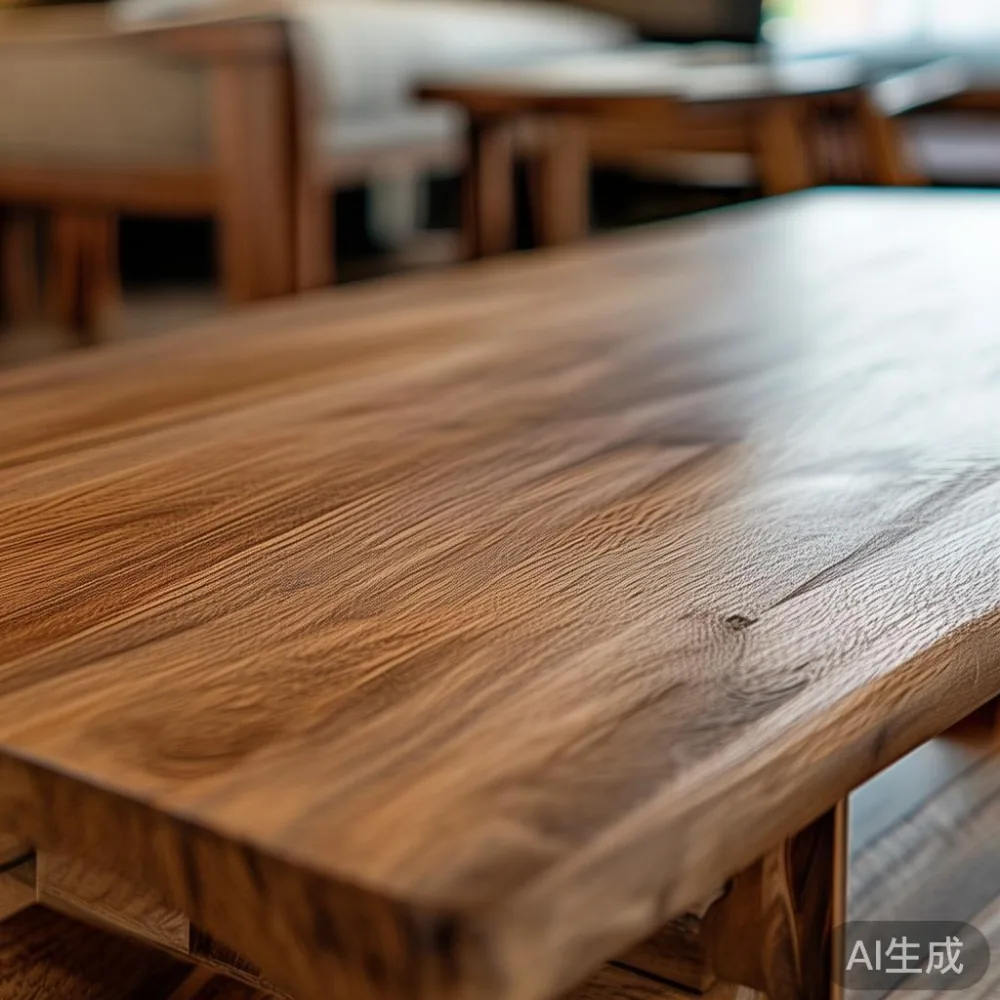
Some figures may look surprisingly high because premium timber is sold by board footage or cubic volume rather than by appearance alone. A single knot does not automatically make a board poor, yet a buyer wanting continuous grain may pay for clearer stock. Pale oak and walnut can also show defects more clearly, so manufacturers may reserve narrower, more consistent boards for visible surfaces.
Softwood is not automatically inferior. kiln-dried pine can be appropriate for a painted bed frame, while ash, oak and similar woods suit a dining table or solid wood sofa frame. The sensible comparison is fitness for purpose: stability, hardness, finish behaviour and expected lifespan, rather than price per cubic metre alone.
Wood movement is a natural characteristic. A solid oak dining table may expand by roughly 3–6 mm across a 180 cm width over seasonal humidity changes. Good joinery and moisture treatment allow this movement without splitting the table. That engineering is part of the value.
Why do joinery and construction change the price?
Joinery often separates affordable flat-pack furniture from a piece intended to remain assembled for decades. Mortise-and-tenon joints, dovetails, dowels, bridle joints and reinforced corners demand more setup time and precision than simple screws inserted into particleboard. They also require stronger timber sections, because a weak joint cannot carry the load.
Consider a 200 × 90 × 76 cm dining table. A light construction may weigh about 42 kg, whereas a thick-edged, hard-wearing solid wood version can weigh 68 kg. The heavier piece usually needs larger boards, more clamping, longer sanding and a stronger base. A marble table in a comparable size may reach 95–130 kg; its stone slab, protective packaging and handling can materially affect the delivered quote.
Last month I visited a furniture workshop during a production inspection. I watched a craftsman test-fit the apron of a dining table, mark a 0.5 mm correction, and reassemble the joint before final clamping. The correction looked tiny on screen, but it kept the rails square under load. The same table also had underside apertures that allowed the top to move. That careful, hidden work is rarely visible in a product photograph, yet it influences both price and longevity.
For the wardrobe category, construction includes drawer boxes, hanging rails, backing panels, adjustable shelves and door alignment. A 180 cm wide wardrobe may contain 6–10 drawers and several internal compartments. Heavy-duty runners and full-extension hinges can add SGD180–650 before installation. By contrast, a modest 45 cm nightstand may only need 1 drawer, 2 concealed fixings and a straightforward panel.
The scale of each piece also affects labour. A 210 cm solid wood sofa frame may require more fabric cutting, foam shaping, stitching and frame assembly than a 160 cm two-seater. Extra material does not translate directly into proportional value, because skilled labour and yield losses increase too.
How much do the finish and surface treatment affect cost?
Finish can alter a piece’s price by SGD90–500 or more, depending on the process and area. Pencil-filler, sanding, staining, sealing, spraying and hand rubbing each add time. A natural oil finish often highlights grain and repairs more easily, while a matt lacquer creates a consistent colour but can be harder to renew locally.
The substrate matters as much as the coating. A dense, stable hardwood generally accepts finish differently from porous pine. Filling grain, preventing blotching and controlling sheen require preparation rather than a single coat. Curved edges and carved details need separate sanding before spraying.
For customers comparing styles, French light luxury often uses pale oak, cream upholstery, restrained profiles and softly rounded details. American light luxury leans towards deeper walnut, comfortable seating and substantial-looking frames. Post-modern light luxury can combine clean lines with selective curves or mixed materials. In each case, finish consistency affects the perceived quality because the eye notices uneven colour and sheen.
Marble deserves separate treatment. A genuine marble table may use a 20–30 mm slab, while an engineered version uses a thinner stone or porcelain layer over a support. Edge profiles, slab matching, crack-resistant support and protective seals all affect price. A 110 cm round marble coffee table might be quoted near SGD1,250–SGD2,400, depending on whether it is solid stone, engineered stone or porcelain.
Ask whether touch-up treatment is available. MIDHILL’s lifetime refinishing service is a meaningful long-term benefit, but the exact scope should be confirmed for each material. Marble, timber and upholstery are not refinished in the same way.
What costs more: a complicated design or a large size?
Size affects material, but complexity often affects labour more sharply. A large rectangular dining table can be produced efficiently from two or three well-matched boards. A dining table with a curved edge, waterfall sides, multiple drawers, a rotating centre and mixed stone sections takes longer to set up and inspect.
Design complexity can also introduce more failure points. A curved solid wood sofa frame needs controlled bending and upholstery fit. A European light luxury bed may require a shaped headboard, layered comfort components and precise junctions around the mattress. An Italian light luxury sofa may use more elaborate cushioning and stitching than a simple straight-edged model.
Dimensions should be checked against the actual home. Common HDB lift openings are about 900 mm wide, though individual blocks vary. A 200 cm table can still enter diagonally, but the usable lift car and turning space must allow it. Narrow corridors and right-angled turns may require an upper-floor delivery crew or partial assembly.
The phrase Modern for small living room is useful, but its real lesson is proportion. A 100 × 55 cm coffee table can work with a 180 cm sofa, whereas a 140 × 80 cm model may crowd a compact living room. Buying a larger model only to leave 60–70 cm of circulation around it is not good value.
For bedroom layouts, a 150 cm bed may suit a 300–330 cm room more comfortably than a 180 cm king. This is where a Nordic for small living room approach—visually light, compact and functional—can save both space and money. Likewise, Mid-century modern for apartment planning should begin with circulation clearances, not product imagery.
Do solid wood pieces always cost more than engineered furniture?
Not always. Engineered options can provide good value where the application does not demand the same stability or repairability. A low-cost bedside table may use veneer over engineered board, while a solid oak nightstand with dovetail drawers commands a higher price because of material and assembly. The relevant comparison is the complete specification, not the headline material.
Solid timber has particular advantages: it can often be sanded and refinished, repairs can be more convincing, and thick edges feel substantial. It also has disadvantages. It moves with humidity, can check around moisture, and heavier construction can increase delivery costs. Particleboard and MDF can offer flat, consistent surfaces and lighter weights, but their core materials generally cannot be restored like solid timber.
Some online prices exclude GST, delivery, assembly or stair handling. In Singapore, GST is generally 9%. A table listed at SGD900 becomes SGD981 before any access charges, while a delivered quote should show the final payable figure. Comparing a low list price with an all-in price can create a misleading gap.
Delivery distance within Singapore is usually not the main driver. Lift access, carrying distance and assembly are more relevant. A unit in Punggol with an open cargo lift may cost less to deliver than a Bedok unit with 12–15 stairs and a 900 mm doorway. Standard delivery might take 3–7 working days, while made-to-order pieces commonly take 6–10 weeks. Custom finishes may require another 1–2 weeks.
How should you compare two credible furniture quotations?
Compare quotes line by line. Record the dimensions, wood species, board grade, joinery, finish, hardware, weight, warranty, delivery and installation terms. Two tables at SGD900 and SGD1,180 may have different thicknesses, drawer counts and assembly charges. The lower figure is only cheaper if it delivers the construction you need.
Ask for the outer dimensions and usable clearance. For a coffee table sg purchase, specify a target height of 38–45 cm, a width that leaves at least 40–45 cm from the sofa, and an edge profile that suits children or frequent movement. For a dining table, allow 75–90 cm behind each seated person in a busy route.
Verify whether the solid wood sofa, bed frame, dining table, wardrobe or nightstand includes the visible surfaces only or the complete carcass. “Solid wood construction” should be clarified against hidden panels, backing boards and drawer bottoms. For a marble table, ask for slab thickness, support design and edge treatment.
Also inspect the small print around damage claims. A 10-year structural warranty is different from a warranty covering every scratch, finish variation or accidental mark. Clarification protects the buyer and helps compare products fairly.
What is the most sensible way to buy solid wood furniture in Singapore?
Begin with the room, then the product, then the material. Measure doors, lifts, corridors and the intended position. Shortlist 2–3 comparable models using identical criteria. Request written specifications and an all-in delivered quotation, including GST, assembly and access charges where applicable.
Style should follow use. A Japandi-style solid wood sofa with a 190–210 cm width may suit a compact HDB living room if its depth stays near 85–95 cm. The question “is Japandi sofa worth it” is less about the trend than seat comfort, frame material, removable covers and the dimensions required for daily use.
Service can also affect lifetime value. MIDHILL’s 10-year structural warranty, lifetime refinishing option, free shipping above US$350 and 14-day return period should be compared with local alternatives. Online information is available at www.midhill.co, and showrooms or production visits can provide a better understanding of timber colour, finish and scale.
The central lesson is simple: solid wood furniture prices reflect a chain of decisions. Species and board selection set the material baseline; joinery, tolerances and hardware determine durability; finish and design affect labour; dimensions and Singapore access conditions affect delivery. A well-specified, moderately sized piece that fits the room and can be maintained may deliver more value than a visually dramatic piece with vague specifications.