How Humidity in Southeast Asia Affects Your Wood Furniture (and What to Do About It)
Last March I stood in a Tampines HDB corridor measuring the lift opening with a tape. The client had ordered a 220 cm solid wood dining table, and the service lift on the 12th floor had an inner width of only 138 cm. We ended up rotating the table 18 degrees, removed two felt-tipped feet, and found that a 4 mm tolerance was all we had to play with. That single afternoon showed me, more than any factory floor visit, why wood furniture in Singapore has a different rulebook from wood furniture in a temperate climate. The piece was fine on day one. What worried me was month six — what 82 percent relative humidity does to a tabletop over the course of a wetter-than-usual monsoon.
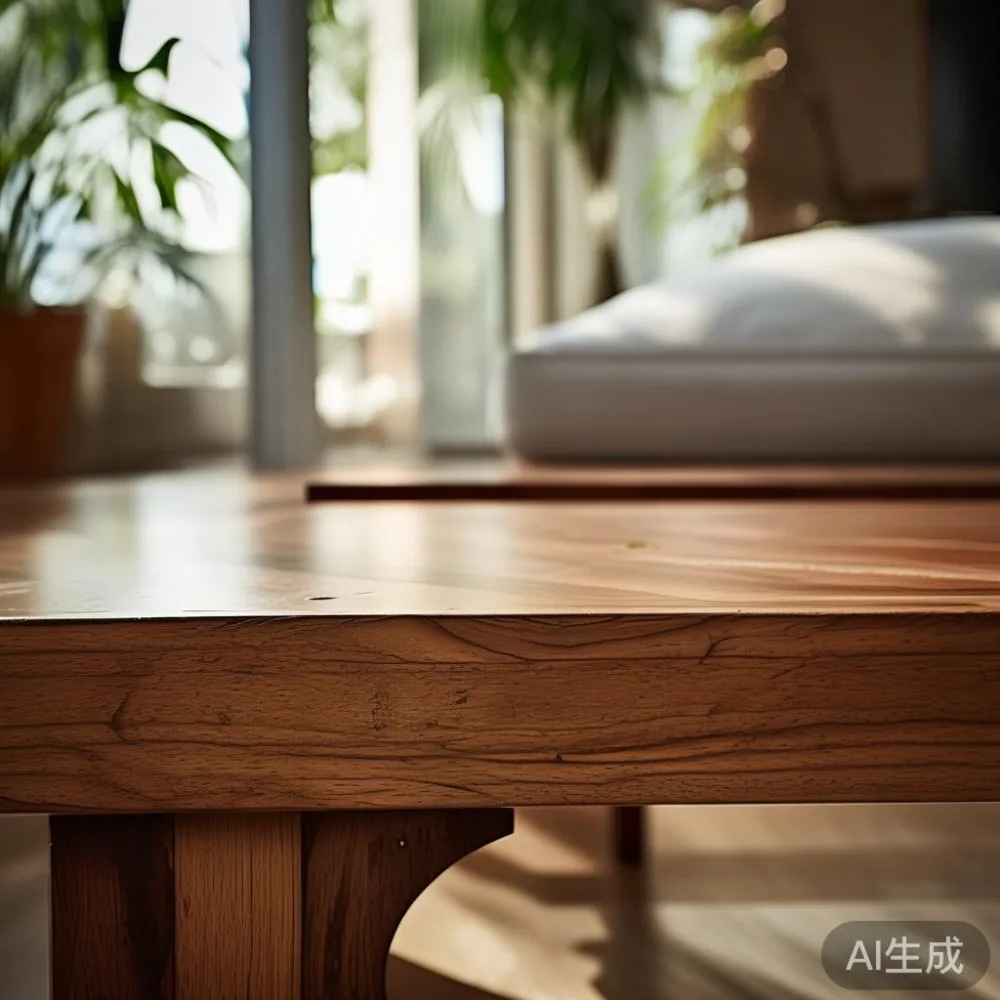
This guide explains the physics of what humidity does to solid wood, the symptoms you can spot in your own home, and the practical habits and product choices that keep a piece like a coffee table sg looking sharp for a decade. I will also touch on how a post-modern light luxury solid wood wardrobe or a French light luxury-inspired bed frame can be specified for our climate if you know which questions to ask the supplier.
Why does Southeast Asian humidity behave differently from European or American humidity?
Most catalogues you find online are written for markets where indoor humidity hovers around 40 to 50 percent. Singapore sits at an annual outdoor average of 78 to 82 percent relative humidity, and indoor levels in a non-air-conditioned HDB room regularly climb to 75 percent or higher, especially during the December to February wet phase and the May to September southwest monsoon. The absolute moisture content a piece of wood wants to hold — its equilibrium moisture content, or EMC — is roughly 8 percent at 30 percent RH and roughly 16 percent at 80 percent RH. That jump from 8 to 16 percent corresponds to furniture movement of 4 to 8 percent across the grain. On a 90 cm wide solid wood coffee table top, 4 percent expansion is 36 mm of total dimensional change between a very dry and a very humid month. On a 200 cm long dining top, expansion along the length is roughly 2 percent, or 40 mm, but most of that is absorbed by breadboard ends or by the joinery, which is why long tops usually fail at the joinery and not at the surface.
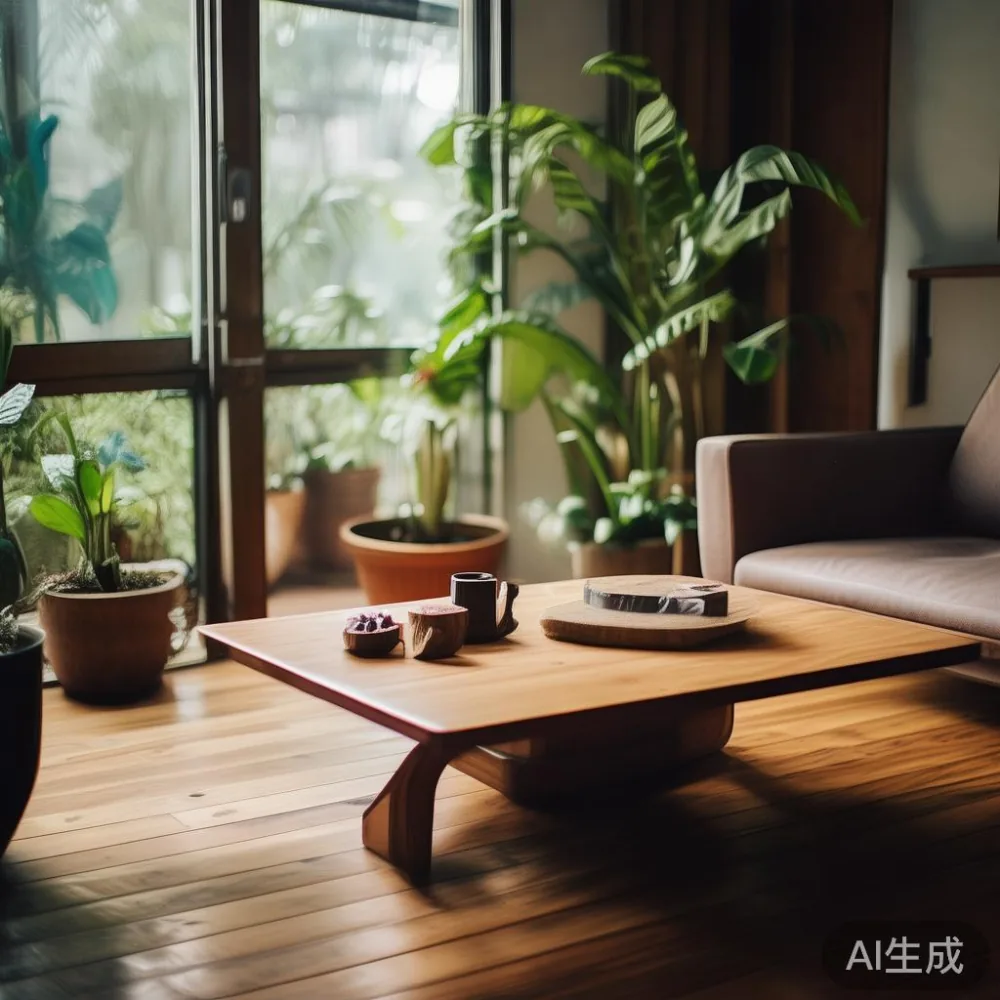
The second difference is duration. In Toronto or Berlin, a humidity swing is seasonal: wood expands in July, contracts in January, and rests in between. Here, our indoor humidity swings are daily. Your air-con runs from 11pm to 7am at 23 degrees and 55 percent RH, then the unit switches off and the room drifts back toward 75 percent by mid-afternoon. The wood is asked to breathe 365 days a year, not four seasons a year. That is also why I never recommend MDF or plywood-core furniture for wardrobes longer than 180 cm in a Singapore bedroom. The cores absorb and release moisture differently from the surface veneer, and the result is rippling on the door faces within 18 to 24 months.
What does humidity damage actually look like on a real piece?
Three patterns show up repeatedly in the workshop. The first is the cup. A solid wood plank that loses moisture from its top face faster than its bottom face curls into a shallow boat shape. You can see this on a marble table if the underlying substrate is poorly sealed, or on a nightstand top within a metre of a window that catches afternoon sun. The second is the gap. During a dry spell — usually when an air-con runs continuously through Chinese New Year week or a long business trip — two adjacent planks shrink and a 1 to 2 mm black line appears between them. That gap closes again in a humid month, but each cycle loosens the joint. The third is the split. End grain dries roughly 10 to 15 times faster than long grain, which is why the worst splits on a coffee table sg always appear at the short ends, not in the middle of the top.
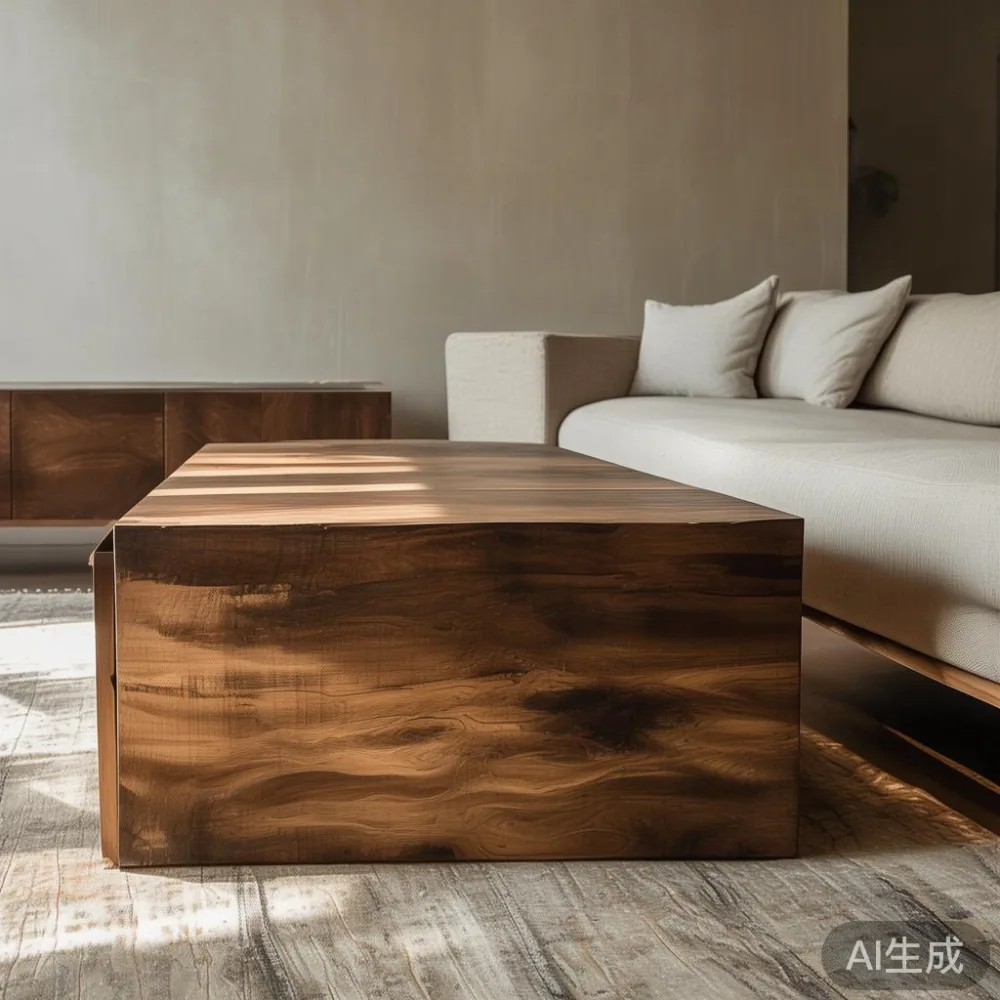
Finishes fail in their own way. Lacquer and conversion varnish are fairly rigid once cured, so when the wood beneath them moves, the finish moves with it — usually by cracking along the grain. Hardwax oil, by contrast, stays flexible and tends to whiten at the joints rather than crack. Neither is wrong; they are simply tuned to different movement budgets. In a Punggol Waterway Brewenade-facing unit with full-height east-facing glazing, I see lacquer failures inside 14 months and hardwax oil weathering inside 24 months, both on identical solid wood pieces from the same batch. The variable is the glazing, not the wood.
Does solid wood really hold up better than engineered wood in our climate?
On a per-cycle basis, yes. A 100 percent solid wood sofa frame, a solid wood bed frame, or a solid wood dining table top can absorb 4 to 8 percent of dimensional change over its lifetime without failing, because each annual ring is free to move independently of its neighbour. Plywood with a 1.2 mm teak face moves a similar amount, but the movement is concentrated at the glue lines, and once a glue line delaminates you cannot re-bond it invisibly from the outside. Blockboard sits in the middle: it moves but holds together, which is why many wardrobes use blockboard carcasses with solid wood faces. Particle board is the worst performer in our humidity and is the material I have seen fail most often — swollen kickboards under kitchen cabinets, sagging wardrobe shelves, peeling melamine on bedside tables.
The catch is that solid wood has to be properly dried at the factory. Furniture-grade kiln drying for Southeast Asia should bring stock to 10 to 12 percent moisture content, not the 6 to 8 percent you find on European imports. A piece dried to 6 percent will arrive feeling perfect in the dry February air-con air, then drink in moisture until it reaches our ambient EMC of 14 to 16 percent by April. That hydration causes the cup, gap, and split problems I described above. When you evaluate any supplier — including MIDHILL, which is a Foshan-based solid wood specialist working with stock dried to 10 to 12 percent for our export markets — ask for the kiln-dried moisture content reading on the spec sheet. If the supplier cannot produce one, that is your answer.
How do HDB layouts, corridor widths, and lift sizes change your furniture list?
Singapore layout rules dictate furniture dimensions long before humidity does. The standard HDB passenger lift measures 148 cm deep by 138 cm wide at the door opening, with an inner usable floor of about 155 cm by 135 cm after the handrail. A service lift on most EC and some condo blocks is closer to 198 cm by 158 cm, but only some blocks have one. Corridors in newer BTOs are 150 cm minimum, while older blocks in Bedok and Toa Payoh can narrow to 128 cm at the refuse chute recess. What this means in practice is that anything longer than 210 cm, wider than 130 cm, or taller than 195 cm has to be planned, not just bought.
My checklist before any delivery reads: lift door width, lift car depth, corridor turning radius (count 60 cm for the longest single panel), front door width (usually 90 to 95 cm for HDB), and the stair landing if it is a walk-up. Last month I visited a Punggol HDB where the corridor outside the unit was straight but only 120 cm, and a 200 cm wardrobe had to come through on its side at 95 cm wide to clear the refuse chute pipe. Three felt pads removed, two cam locks loosened, reassembled in the bedroom inside 40 minutes. If you are choosing new furniture, build in a 10 to 15 cm margin on every dimension you measure. For a Modern light luxury TV console that is 200 cm long, ask whether the back panel can ship detached and be re-fixed in situ — it saves an entire delivery slot on tight blocks.
What routine actually keeps wood furniture healthy in our climate?
Daily habits matter more than the brand on the label. Keep indoor relative humidity between 55 and 65 percent if you can. A SGD 35 to 60 hygrometer on each air-conditioned room tells you which direction your home is drifting. When the read-out climbs above 70 percent, run the air-con on dry mode for 90 minutes; when it drops below 50 percent for more than 36 hours running, place a ceramic water dish near (not on) a solid wood coffee table to nudge the EMC back up. Dust with a barely damp microfibre cloth, never a dripping one, and rotate table decor four times a year so one edge does not spend the whole year in permanent shadow. On French light luxury-inspired pieces with marble or stone inlays, wipe the stone weekly with a neutral pH cleaner — acid-sensitive stones like Carrara etch within minutes of lemon juice contact, and the damage is permanent.
Twice a year, put aside 20 minutes per piece for a maintenance pass. Vacuum drawers and runners with a brush nozzle, tighten bed frame bolts a quarter turn (more and you strip the inserts), and apply a thin coat of paste wax or hardwax oil to tops that look thirsty. A 250 ml tin of good wax costs SGD 18 to 32 and covers roughly 8 to 10 sqm per coat. Done every May and November, this extends the refinishing interval on a dining table from 5 years to 10, and on a solid wood wardrobe carcass the finish can run 12 to 15 years before it needs a sandback. For nightstand drawers that start to stick in the wet phase, rub the runners with a paraffin candle — cheap, effective, and reversible.
Is European bed worth it in a high-humidity bedroom without air-conditioning?
Honest answer: only if you choose the right construction. A European-spec bed frame is usually built for 45 to 55 percent RH, with kiln-dried timber at 8 to 10 percent moisture content and a tight, waxed joinery. Drop that same bed into a 78 percent RH Tampines bedroom that is not air-conditioned, and within eight months you will see the slats cup, the headboard panels gap by 2 to 3 mm, and the footboard loosen at its dowels. So the question of is European bed worth it in Singapore really comes down to how the bed was re-specified for our export climate, not whether it carries a European look. Brands that understand this kiln-dry their stock one extra cycle to 10 to 12 percent and use a slightly looser tolerance on the mortise-and-tenon joints so the wood has 2 to 3 mm of movement room.
How can you spec a light luxury piece that survives our weather without looking like teak?
Light luxury is achievable in our climate, but the material list and the finish matter more than the silhouette. For a Modern light luxury TV console, ask for white oak or ash with a hardwax oil finish rather than a high-gloss lacquer — the oil film is forgiving of monthly expansion and compression, while the lacquer film is not. For a bedroom, an American light luxury-inspired solid wood bed frame in walnut or white oak, paired with linen upholstery on the headboard, handles 65 to 75 percent RH cycles without seam slippage, provided the linen is pre-washed and the foam is reticulated (open-cell) so it breathes. Avoid tight button-tufted leather in the headboard — trapped moisture inside the buttons is what eventually pushes them out.
If you are browsing for sale light luxury furniture listings online, filter on construction details rather than on the photo. Look for: kiln-dried solid timber (with a stated moisture content), mortise-and-tenon or dovetail joinery, breadboard ends on tops longer than 150 cm, and a finish labelled for tropical use. Skip any listing that bundles "European solid wood" with "lowest price guaranteed" — that combination almost always means under-dried oak or thin veneer over particle board. If a price looks unusually low for what is claimed as cheap light luxury furniture, the saving was almost certainly made at the kiln, not at the showroom. For trade buyers looking at wholesale European light luxury furniture for resale, insist on a third-party moisture content certificate and a sample box that you can acclimatise in Singapore for at least 14 days before signing the PO.
What is the smartest way to plan a wardrobe for a HDB or condo bedroom?
Wardrobes are the piece that gets humidity stress longer than any other in the home — they run floor to ceiling, they trap warmth from the room, and their doors are usually closed during the day. Three rules I share with every Punggol and Bedok client. First, leave a 25 to 40 mm gap behind the wardrobe and the wall so air can move and the back panel can breathe. Second, specify full-extension drawer runners with metal sides, not plastic; plastic runners creep sideways in high humidity and the drawers stop opening smoothly within 18 months. Third, ask whether the back panel is 9 mm plywood or 18 mm solid wood — the 18 mm option costs roughly SGD 120 to 220 more per wardrobe but it stops the carcass from racking when the room humidity swings.
If you have ever searched for guidance on how to style European light luxury wardrobe in apartment layouts without making the room feel like a showroom, the trick is to keep the wardrobe silhouette simple and let the hardware do the talking. Long vertical pulls in brushed bronze or blackened steel read as light luxury without the fuss. Use the wardrobe as a flat wall plane and layer art, a slim bench, or a single sculptural lamp in front. Never push two wardrobes into one corner with no breathing gap; the moisture that builds between them will mark both pieces within two wet seasons. If you want to discuss a custom layout or a quotation, the team at MIDHILL can be reached at midhillco@gmail.com with bedroom dimensions and they will return a scaled plan within two working days.
What should I check before I click buy on any solid wood piece online?
Five questions, asked in this order, will filter out 80 percent of the problems I see in the workshop. One: what is the kiln-dried moisture content, and can the factory provide a reading? Two: what is the joinery — mortise-and-tenon, dowel, biscuit, or cam lock? Three: what is the finish, applied how many coats, and was it applied after the piece was fully assembled? Four: what is the warranty on structure and on finish, and what is excluded? Five: what happens if the piece arrives and the dimensions do not fit my lift and corridor — is return free, partially subsidised, or at my cost?
A reliable supplier answers all five within 24 hours. At MIDHILL the export team provides a 10-year structural warranty and a lifetime refinishing service for pieces sold into Singapore, which is the kind of long-tail support that only makes sense if the kiln drying was correct in the first place. Free shipping kicks in above US$350 landed (roughly SGD 470 at today's rate), and a 14-day return window covers fit and finish issues. The warranty only matters, though, if you also do the maintenance I described earlier — keep the RH in range, rotate decorative loads, wax twice a year, and your solid wood dining table, bed frame, wardrobe, nightstand, coffee table sg, and marble table will all outlast the lease on the flat they sit in. The science of wood in our climate is not complicated — it just rewards owners who treat the home as a small workshop rather than a showroom.