How Humidity in Southeast Asia Affects Wood Furniture — And What to Do About It in Your Singapore Home
I learned the hard way. Last October, after two monsoon weeks in Tampines, I opened my storeroom to find a 6-cm gap along the long edge of a solid wood dining table I'd owned for nine years. The culprit was not poor craftsmanship — it was the same culprit that has ruined more imported furniture in Singapore than any other: relative humidity swinging between 78% at 3 a.m. and 91% during a thunderstorm. That single experience pushed me to measure, log, and finally replace pieces with the right species and the right joinery for a tropical climate. What follows is everything I wish someone had written down for me before I bought my first solid wood sofa frame.
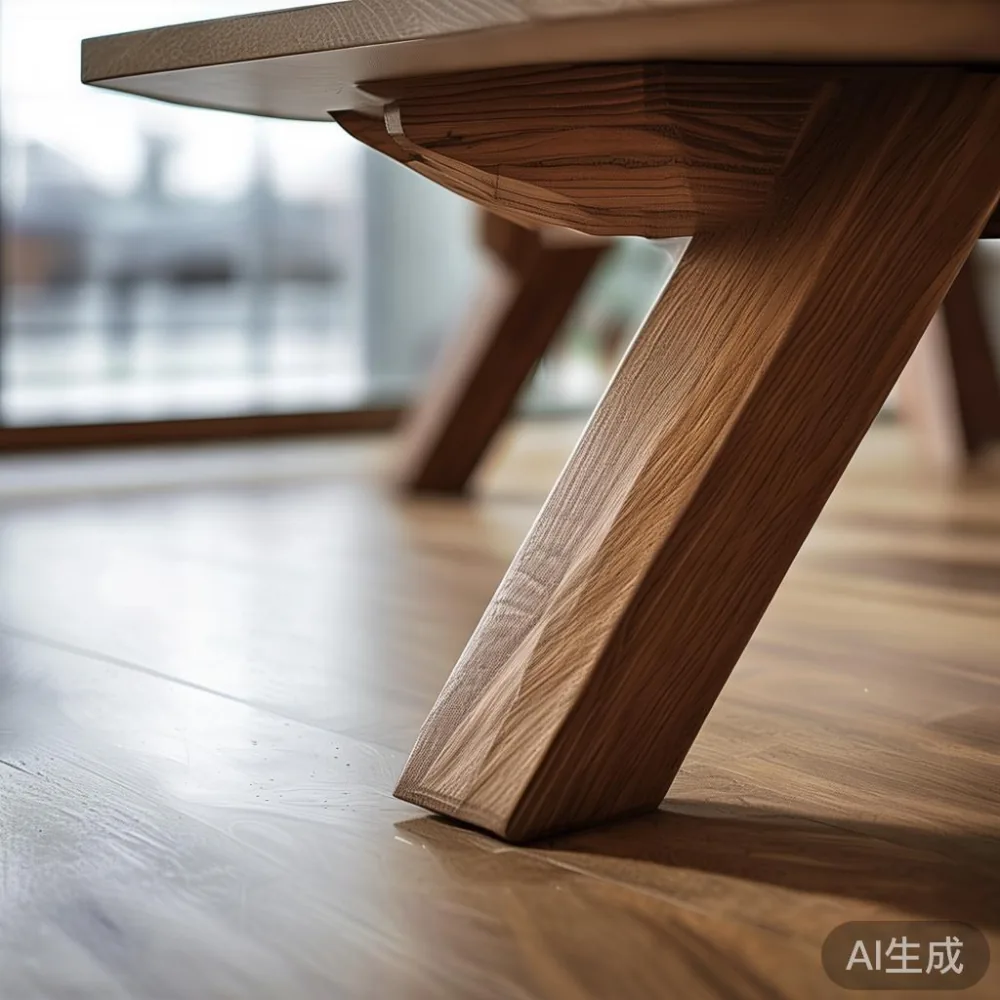
Why does wood move so much in Singapore, and which species actually hold up?
Wood is hygroscopic — it exchanges moisture with the air around it. In Singapore, ambient RH rarely drops below 65% and routinely hits 85–90% during the Northeast Monsoon (November to January) and the Southwest Monsoon (June to September). A 1.8 m solid oak dining table stored in a 28 °C, 70% RH room today might sit at 8.5% moisture content; in a non-air-conditioned corridor it can climb past 14%, and you will see cupping, crowning, or that telltale 5 mm bow across the top. Hardwoods behave differently. Rubberwood (Hevea brasiliensis), once kiln-dried to 8–10% MC and then conditioned for 30 days at 27 °C / 75% RH, stays remarkably stable — which is why a beige rubberwood marble top coffee table is one of the most forgiving choices for a ground-floor HDB flat in Bedok. Teak, with its natural oils, handles bathroom-adjacent humidity well. American walnut moves more than rubberwood but less than beech. Particleboard and MDF swell irreversibly once they pass 70% RH for any length of time, which is why a SGD 299 flat-pack wardrobe often delaminates within 18 months in a Punggol condo while a properly jointed solid wood wardrobe, sealed on all six faces, can run 15+ years and still be sanded back.
How much humidity does solid wood furniture in Singapore actually need to handle?
Here are the numbers I keep on a laminated card inside my wardrobe door, because once you see them you stop blaming the carpenter:
- Average outdoor RH, Singapore (MSS data): 78–82% year-round.
- Indoor RH with daily air-conditioning at 24 °C: 55–65%.
- Recommended stable range for indoor solid wood: 45–65% RH.
- Corridor RH in void-deck lobbies (no AC, concrete walls): often 80–85%.
- Bathroom-adjacent bedroom wall, post-shower, 10 minutes: can spike to 92%.
A SGD 12 hygrometer from any Tampines Mall electronics shop is not optional — it is the cheapest insurance you can buy for a SGD 2,400 solid wood bed frame. If your reading sits outside 45–65% for more than two days, run a dehumidifier (a standard 12 L/day Meaco or similar draws about SGD 4–6 per day of electricity at current 25.46 cents/kWh tariff) or move the piece to a more stable room.
Will my new furniture actually fit through the HDB lift and corridor?
This is the question nobody asks until a 2.4 m x 1.0 m wardrobe is wedged between the third-floor lift door and the corridor wall in a 1970s-era Block 139A. Standard HDB passenger lifts are 1.1 m wide x 1.4 m deep x 2.3 m tall, with doors around 0.9 m wide. Newer BTOs (post-2015) often run 1.2 m x 1.6 m x 2.4 m. Corridors are typically 1.5 m wide but can pinch to 1.2 m at fire-refuge recess points. Before you buy anything taller than 1.9 m or wider than 1.0 m, do this:
- Measure your lift door, not the lift cabin — the door is the bottleneck.
- Measure every 90° turn in the corridor, including the recess by the refuse chute.
- Add 10 cm clearance for padding and the mover's trolley.
- Ask the seller for a fully assembled dimension drawing, not a product photo.
A good rule: any solid wood bed frame over 2.0 m long should arrive flat-pack with knock-down joinery — dowels, mortise-and-tenon, or confirmat screws — so the headboard and side rails can be carried in separately. The same goes for a 2.2 m wardrobe and even most 1.6 m dining tables. Marble-top pieces need extra care: a 1.2 m round marble top weighs 65–80 kg and should never be tilted on its edge; it must travel flat, foam-banded, on an A-frame trolley.
What is the best shoe cabinet for a small apartment?
For a small apartment in Singapore, the best shoe cabinet is a 80–100 cm tall, 60–80 cm wide, 25–35 cm deep solid rubberwood or teak unit with tilt-out drawers, adjustable internal shelves, and a sealed back panel — typically retailing between SGD 380 and SGD 720. Why this exact shape? Because the average Singapore household owns 17–24 pairs of shoes (a 2023 NUS survey), and a HDB玄関 doorway is only 90–95 cm wide, so anything wider blocks the corridor. A solid wood shoe cabinet at 30 cm depth fits flush against the wall without intruding on the 1.0 m walkway that fire code effectively demands. Avoid MDF-backed units: in a ground-floor Simei flat where RH hovers at 78%, MDF will sag at the adjustable-shelf pin holes within 12 months. Look instead for solid panels with a 0.6 mm PVC or PU sealant on all edges, including the hidden bottom panel — that is the surface closest to the floor and the wettest. Two extra features are worth paying for: a 5 mm raised base (so wet shoes and mop water don't wick into the end grain) and magnetic soft-close hinges rated for 80,000 cycles. A model from a maker with a 10-year structural warranty, lifetime refinishing, and free shipping over US$350 — converted, that's roughly SGD 475, a sensible threshold for consolidated delivery — will usually beat the cheapo SGD 199 option on cost-per-year inside five years.
How should I care for solid wood once it is inside my home?
Three habits, repeated weekly, will add a decade to any piece.
1. Stabilise the room, not the furniture. A 25–35 SGD digital hygrometer, a SGD 159–229 12 L/day dehumidifier, and a habit of closing windows during heavy rain (use the HDB's common corridor ventilation instead) keep RH between 50% and 65%. This is the single biggest reason antique chests in Tiong Bahru shop houses still look pristine at 80 years old.
2. Oil, don't polish, twice a year. Hardwax oil (Osmo, Rubio Monocoat) replenishes the wood's own oils and lets the surface breathe. Spray polishes leave a silicone film that traps moisture and dulls over time. Apply with a lint-free cloth, two thin coats, 24 hours apart, ideally during the drier February or August window.
3. Rotate exposure. Move a solid wood coffee table sg-style piece away from the window 30 cm during peak sun (10 a.m. – 3 p.m.) to prevent uneven fading, and rotate any dining table 180° once a quarter so the side facing the air-conditioner doesn't dry out faster than the other. For a French light luxury dining table with a marble top, place felt pads under every object — marble etches from citric acid in under 30 seconds, and the surrounding wood will fade faster than the stone if exposed to UV through a west-facing window.
Which materials and finishes are genuinely suited to a Punggol or Bedok condo?
Solid wood comes out ahead of engineered wood for almost every category in a tropical home — but only if the finish is right. Look for:
- Wood species: rubberwood (Hevea), teak, white oak (quartersawn for stability), American walnut, and Nyatoh for post-modern light luxury lines.
- Joinery: mortise-and-tenon for bed frames and dining tables; dovetail drawers on nightstands and wardrobes; finger-jointed panels only where hidden.
- Finish: 3 coats of PU or hardwax oil on all six sides, including the underside (most makers skip this; it is where mould starts).
- Marble: only honed or leathered finishes for a marble table — polished marble is a slip hazard near pools and balconies, and shows every ring mark.
- Hardware: stainless steel 304 or brass; anything zinc-plated will bloom white within six months at 80% RH.
A solid wood sofa frame in rubberwood or ash, kiln-dried to 8–10% MC, will outlast a MDF-frame sofa by 3–4x in a Singapore flat. The same logic applies to a bed frame, a dining table, a nightstand, and a wardrobe: every internal panel, drawer bottom, and back panel should be solid — or at minimum, plywood with a marine-grade rating. Anything stamped "E1" or "E0" is about formaldehyde, not moisture, and tells you nothing about tropical performance.
What about delivery, GST, and warranty in 2025?
Budget these line items before you click "checkout" on any mid- to high-end piece:
- GST: 9% on all furniture sold locally; a SGD 1,500 dining table lands at SGD 1,635 all-in.
- Delivery inside mainland Singapore: SGD 60–120 for ground floor, SGD 120–200 above the 10th floor without a service lift, plus SGD 40 per flight of stairs if the freight lift is out of order.
- Free shipping thresholds: most established makers offer it above SGD 450–500; one of the more generous policies I've seen is free shipping over US$350 (about SGD 475) with white-glove placement and carton removal included.
- Lead time: 14–30 days for stocked solid wood pieces; 45–75 days for bespoke marble tops or custom American light luxury wardrobes.
- Returns: 14-day return windows are standard, but custom-finished items are usually non-returnable except for genuine defects — read clause 7 carefully.
- Warranty: a 10-year structural warranty on frames and joinery is the marker of a maker who kiln-dries their own timber. Lifetime refinishing is rarer and worth a 10–15% premium; sanding back 1.5 mm of surface every 12–15 years can keep a heirloom table alive for 60+ years.
I visited a friend's new Punggol Waterway Rise BTO last month. She had just received a beige rubberwood marble top coffee table, a solid wood bed frame in white oak, and a four-seater rubberwood dining table with a Carrara marble top — all from a Foshan-based maker she had researched for six weeks. The lift was tight, the corridor was the standard 1.5 m, and the delivery team showed up with an A-frame trolley, two blankets, and a moisture meter. They scanned every panel at the door, logged readings between 8.2% and 9.4% MC, and refused to install two pieces until she ran the dehumidifier for another 24 hours. That kind of field discipline is worth more than any marketing claim — and it is the single biggest reason pieces from makers with proper kiln-drying, sealed backs, and mortise-and-tenon joinery look better at year five than the alternatives do at month six.
How do I tell a well-made piece from a pretty one, in 90 seconds?
Run this checklist in the showroom, with your phone flashlight:
- Look at the underside of the table or inside the wardrobe drawer: is the wood the same species as the top, or is it a different, cheaper panel?
- Open and close every drawer three times. Dovetail joints feel slightly gritty; stapled MDF feels too smooth and will loosen.
- Smell the piece. A strong chemical or sweet solvent smell means the finish is off-gassing — risky for a child's bedroom.
- Tap the top with a knuckle. Solid wood rings; MDF sounds like a hollow door.
- Ask for the moisture-content reading at the point of dispatch. A serious maker will have it printed on the packing list. Anything above 12% for a Singapore-bound piece is a red flag.
- Check the back of wardrobes and the inside of bed-frame drawers for a stamp: maker name, year, batch number. Engraved stamps are a good sign; stickers are neutral; nothing is a warning.
Solid wood furniture in a tropical city is a quiet negotiation between the wood, the room, and the owner. Keep the room between 50% and 65% RH, oil the surfaces twice a year, measure before you measure twice, and buy from makers who kiln-dry, seal all six sides, and back their frames for a decade. Do that, and the dining table you buy this year will still be the one your children eat at in 2045 — and the coffee table in the living room will not develop that 6-cm gap mine did last October.