What Actually Drives the Price of Solid Wood Furniture — A Singapore Buyer's Breakdown
I still remember standing in a Tampines HDB lift last month, watching a delivery team sweat a flat-pack coffee table up nine floors. The box was 1.6 metres long, weighed 38 kg, and scraped both walls of the corridor on the way out. The owner had paid S$189 for it online. Two weeks later, half the veneer was peeling at the corner. That single scene captures the gap between cheap and actually affordable in solid wood furniture — and it is the gap this article is built to explain.
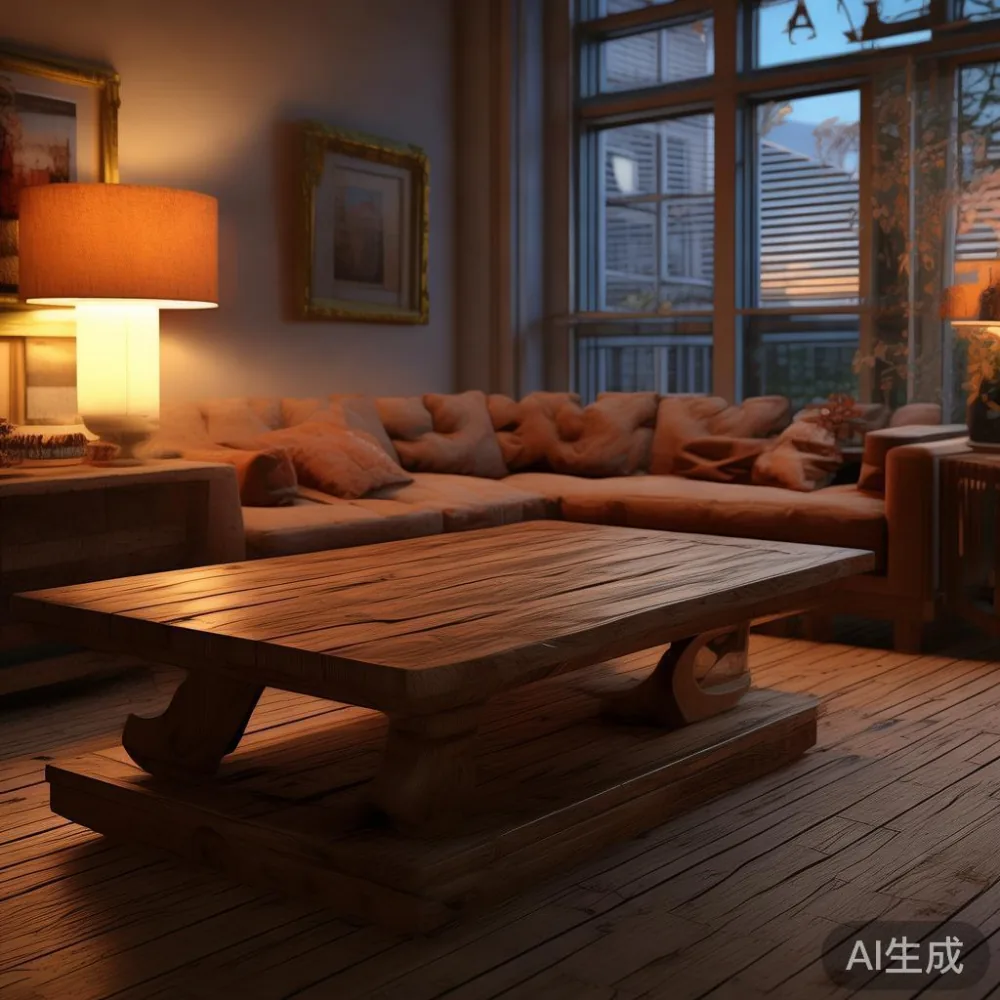
Solid wood furniture is one of the few things where a higher sticker price almost always reflects something measurable: the species, the thickness, the joinery, the finish, the logistics. Once you know what those numbers actually mean, price stops looking like a mystery and starts looking like a receipt. Below is the breakdown I walk customers through when they visit our Foshan showroom or call us from a Bedok or Punggol HDB asking why one coffee table sg is S$420 and another is S$1,680.
Wood species: where the biggest price jumps come from
Two pieces can both be marketed as "solid wood" and cost wildly different amounts because the species are worlds apart. Here is what you are actually paying for, in rough Singapore retail terms:
Rubberwood (Hevea): S$280–S$650 for a 110–120 cm coffee table. Dense, plantation-grown, widely used in Malaysian and Thai production. Honest value, but it dents easily and darkens unevenly over 3–5 years.
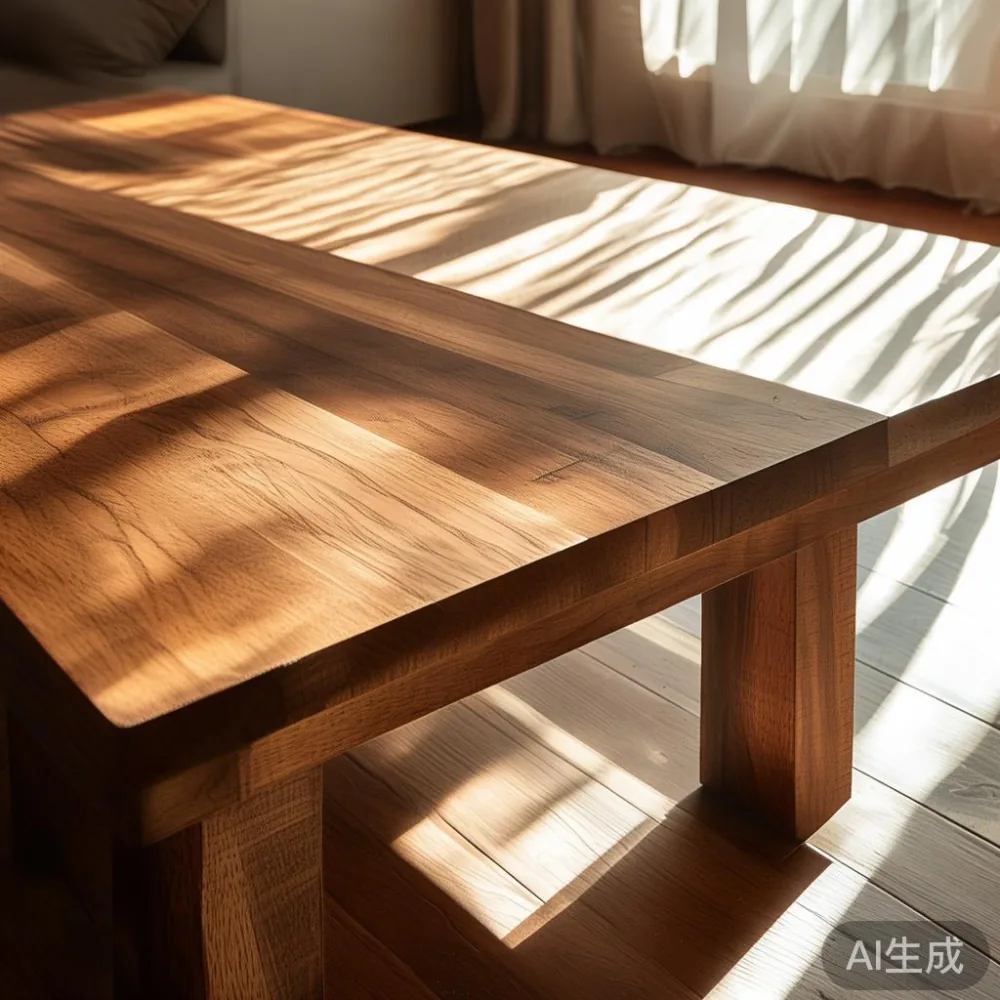
Ash and oak (often imported from Eastern Europe or North America): S$950–S$2,400 for the same 110–120 cm size. Open grain, takes stain well, lasts 25+ years with normal care. This is where the curve starts bending upward.
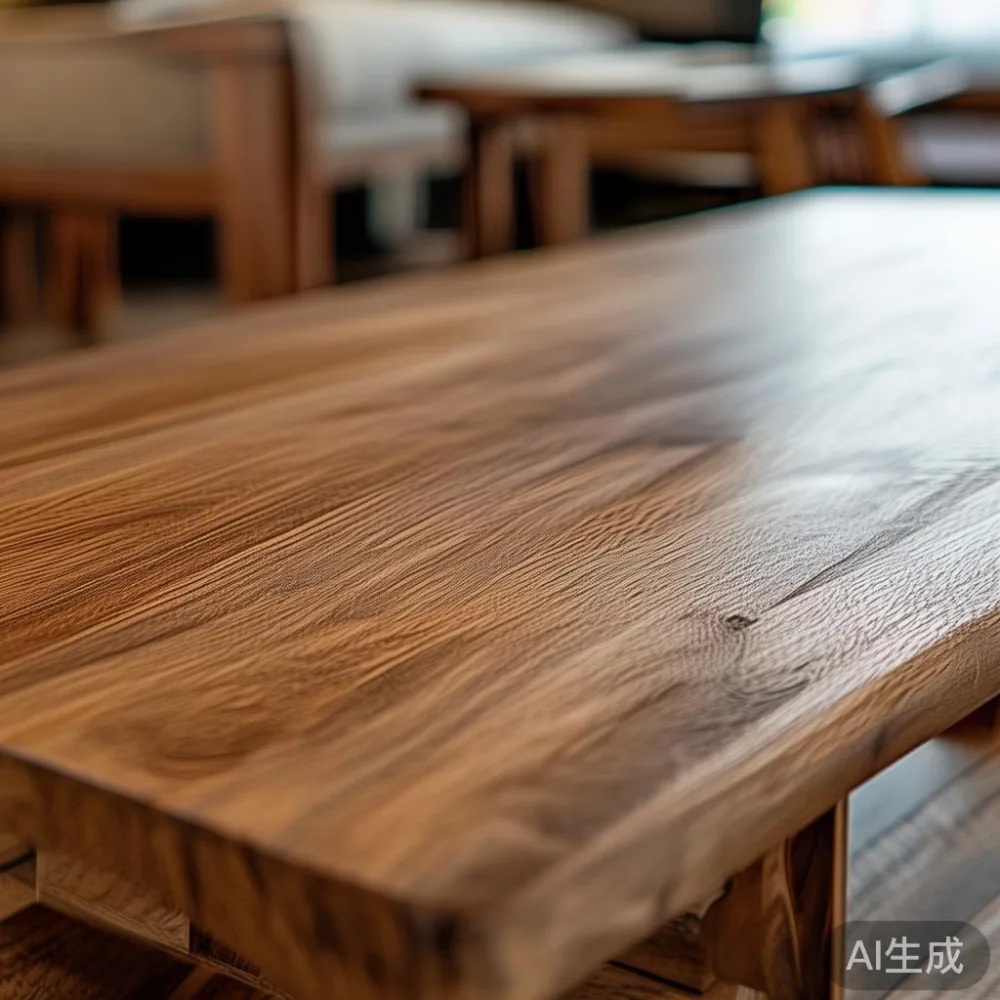
Walnut, cherry, teak (F-grade Burmese or reclaimed Indonesian): S$2,200–S$4,800 for the same footprint. Slow-grown, naturally oily, excellent for Singapore's 28–34°C humidity if the kiln-drying was done correctly (moisture content under 12%).
A simple rule: if the seller cannot tell you the species, the kiln-dry percentage, and the country of origin, the price is hiding something. At MIDHILL's Foshan facility, every batch of FAS-grade ash and walnut carries a moisture-meter reading logged against the serial number — that single number is the cheapest insurance against a warped top in your HDB.
Thickness, dimensions, and the kilogram test
Solid wood is sold by volume, and volume means weight. A 110 × 60 × 4 cm ash tabletop weighs roughly 19 kg; the same top in 6 cm thickness weighs about 28 kg. That 9 kg difference costs about S$240 in raw material alone, before joinery and finish. The thickness of the tabletop, when you actually measure the price of solid wood furniture, accounts for 18–30% of the difference between a budget piece and a long-term one.
Dimensions matter in a Singapore-specific way. HDB corridor widths are 1.2 m minimum, and standard service lifts are 1.5 m deep by 1.8 m wide with a 1.0 m door. A 140 cm-long marble table or solid wood dining table will not fit through a 1.0 m door standing upright — it has to go in diagonally, and the crate needs 5–10 cm of clearance on each side. MIDHILL's export team sizes every crate to clear these dimensions before container day, which is why our Singapore deliveries consistently arrive on the first floor-by-floor attempt rather than the third.
Joinery and structural warranty: the part nobody photographs
Marketing shots show you the wood grain. The warranty shows you the joint.
Doweled joints (cheap): two 8 mm dowels per corner. Lasts a few. Fails at S$0–S$50 extra cost to the maker.
Mortise-and-tenon (mid): the rail is cut into a socket. Lasts 15+ years. Adds about S$120–S$180 per piece in labour.
Mortise-and-tenon with corner braces + corner blocks glued and screwed (premium): the standard on a 10-year structural warranty. Adds S$260–S$380 in labour but means a HDB wardrobe door in a Tampines family flat can take 25,000 open-and-close cycles over a decade without sagging.
A 10-year structural warranty is not just paperwork — it is a confession by the maker that they have calculated the joint can hold the load. When you read the warranty card, look for the words "joint failure," "splitting," and "sagging." If those are explicitly named, the maker has engineered against them. At MIDHILL, we cover ten years on structure because the engineering is documented, not assumed.
Is a storage bench worth the price in Singapore?
Yes — a well-built storage bench pays back its premium in roughly 14 months in a typical three-room HDB, because it replaces a separate shoe rack (S$180–S$320), a side table (S$220–S$450), and the visual clutter of three pieces crowding a 1.2 m corridor landing. A 120 × 40 × 45 cm solid wood storage bench in ash with a lift-up lid and soft-close hinges runs S$680–S$1,050 in Singapore, depending on whether the run is hand-finished or line-finished. The hidden cost is hinges: cheap piano hinges fail in 8–14 months; quality soft-close hinges last 50,000 cycles (roughly 14 years of daily use). That hinge difference alone is S$90–S$160, which is why two benches that look identical in a catalogue can differ by S$260 once you open the lid.
Finish, light-luxury positioning, and why a 5% price step can mean a 60% perception jump
Light luxury (sometimes called French light luxury or post-modern light luxury in our export markets) is a finishing school, not a material category. The wood is still ash or walnut; what changes is the finish system. A standard NC lacquer is two coats, 25–35 microns total, and reveals the wood's natural pores. A light-luxury finish is a multi-coat system: sealer, colour wash, grain filler, base coat, top coat, hand-buffed wax — typically 180–260 microns and 8–12 hours of additional labour per piece.
For a 110 cm coffee table, that finish system adds S$180–S$280 to the wholesale price. For a 200 cm solid wood dining table seating six, it adds S$420–S$650. The result is a piece that photographs warmer, ages more slowly, and feels heavier in the hand — three things a buyer notices within ten seconds of touching the piece. American light luxury is a related school that tends toward wider planks, matte sheens, and a slightly more rustic grain display; the construction discipline underneath is identical.
You can see the same logic in a marble table: a 90 cm round marble top with a solid wood base starts around S$1,050 if the marble is a 12 mm honeycomb-backed ceramic, and runs to S$3,400 if it is a 16 mm natural travertine with full-pour resin backing. The wood base is the same factory; the difference is the slab.
Logistics: corridor, lift, and the Singapore-specific delivery premium
Singapore is not a hard market to reach by ship — Port of Singapore handles 37 million TEU a year — but it is a hard market to deliver into. The cost breakdown for a single 110 cm coffee table shipped from Foshan to a Bedok HDB looks like this:
Ocean freight (40 ft HQ container, shared): S$55–S$80 per piece at typical cube.
Customs clearance + 9% GST on the CIF value: S$60–S$130 depending on declared value.
Trucking from PSA to warehouse: S$25–S$45.
Last-mile delivery to the door (with manpower for a 28 kg piece): S$60–S$120 for a standard unit, S$140–S$260 if a stair carry or special-handling window is required.
Free shipping thresholds matter because they bundle these four lines into one number. MIDHILL's free-shipping floor for Singapore is set at a coffee table sg unit price that lets us absorb freight, customs, and last-mile without the buyer itemising them — and we surface the landed cost on the quote rather than hiding it in a cart total.
Free shipping thresholds matter because they bundle these four lines into one number, and our free-shipping floor for Singapore is set at a unit price that lets us absorb freight, customs, and last-mile without the buyer itemising them. We surface the landed cost on the quote rather than hiding it in a cart total, which is why a Tampines customer ordering a single coffee table and a pair of nightstands sees the same all-in number whether the order is one piece or three.
After-sales: refinishing, returns, and the real cost of a cheap piece
A 14-day return window catches manufacturing defects. A lifetime refinishing offer catches the next 15 years. Refinishing — sanding back to bare wood, re-staining, re-sealing — typically costs S$280–S$520 per piece if outsourced locally. If the maker offers it for the cost of transport, the maker has already priced the original finish knowing it can be redone. That changes which finish system the maker chooses in the first place.
This is also why a solid wood bed frame, dining table, wardrobe, or nightstand from a maker with 15+ years of export history tends to outlast a flat-pack competitor by 8–14 years in real Singapore households. The piece is engineered to be re-finished, not engineered to be replaced.
How to read a price tag like a buyer, not a browser
When you see a price for a solid wood piece, the cheapest way to read it is to ask four questions:
1. Species and origin — and can the seller name the kiln-dry percentage (target 8–12%)?
2. Joinery type — dowel, biscuit, mortise-and-tenon, or mortise-and-tenon with corner blocks?
3. Finish system — single coat NC, multi-coat PU, or hand-buffed wax?
4. Warranty language — does it name the failure modes, or just say "quality guaranteed"?
Those four answers explain 80–90% of the price gap between a S$420 coffee table and a S$1,680 coffee table in Singapore. The remaining 10–20% is logistics, finish labour, and the maker's overhead — all of which you can usually verify by asking for an all-in quote with delivery, GST, and any stair carry itemised. A Nordic wardrobe sg uae export specification we shipped earlier this year, for example, broke down to 38% raw wood, 22% joinery labour, 19% finish, 12% hardware, and 9% logistics — close to the industry norm and verifiable on the proforma invoice.
Putting it all together: a Singapore buyer's checklist
If you are furnishing a new HDB in Punggol, refreshing a condo in Bedok, or replacing a single coffee table sg piece that did not survive its first humidity season, the following five-step check will keep you inside a sensible price band without losing sleep over the structural warranty.
Step 1: Decide the species band — rubberwood for budget, ash or oak for mid, walnut or teak for long-term.
Step 2: Measure your lift and corridor. A 140 cm crate needs a 1.5 m-deep lift or a diagonal carry.
Step 3: Ask for the joint specification in writing. Mortise-and-tenon with corner blocks is the floor for a 10-year warranty.
Step 4: Ask for the finish spec in microns and in coats. Single-coat NC lacquer tops out around 35 microns; light-luxury multi-coat systems run 180–260 microns.
Step 5: Read the warranty language. Look for the words joint failure, splitting, sagging, and refinishing. If they are all there, the maker has done the maths.
Solid wood furniture is one of the few categories where the price genuinely reflects the engineering — and where the engineering is genuinely inspectable. Spend an extra fifteen minutes asking the four questions above, and the difference between a S$420 piece that lasts four years and a S$1,680 piece that lasts twenty-five stops being a mystery. It becomes a line item — and a line item is something any Singapore buyer can make a decision on.