What Actually Drives The Price Of Solid Wood Furniture
Walk into any showroom along Alexandra Road or scroll through a Tampines furniture catalogue and the same question tends to surface: why does one solid wood coffee table sit at S$680 while another, almost identical at first glance, sits at S$2,400? Most buyers assume the more expensive piece is simply a brand markup. The honest answer is more textured than that. After spending last month visiting three factories in Foshan with a colleague who sources for several Singapore retailers, and after eight years of conversations with carpenters, finishers, and importers, I can tell you that the price gap comes down to roughly ten measurable factors. Some are obvious. Some surprise even seasoned buyers. And for homeowners fitting out a 1,050 sqft Punggol HDB or a 480 sqft Bedok condo, every one of those factors shows up in the final invoice.
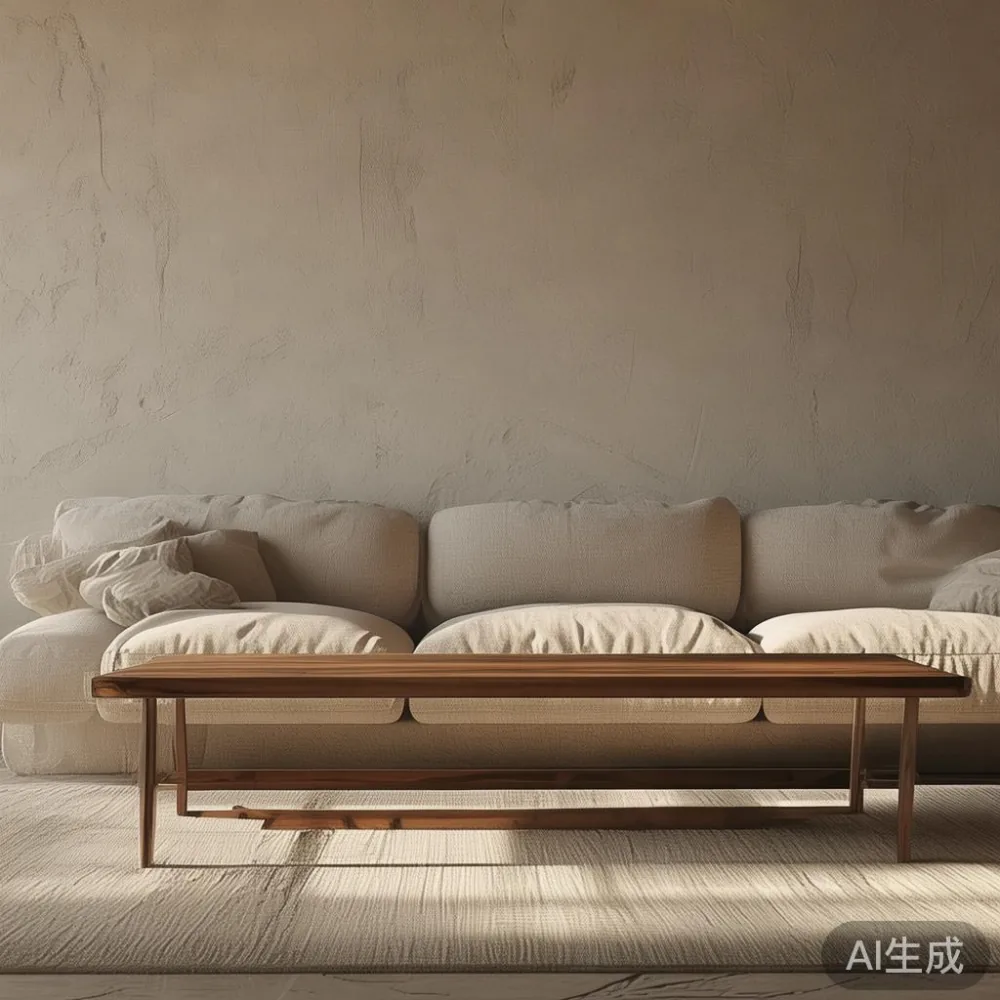
MIDHILL has been in Foshan since 2008, and watching how their team discusses price with regional buyers is revealing. They rarely lead with the word "premium". They lead with the species of timber, the drying schedule, the joinery, the finish system. Those four variables quietly decide 70% of what you pay for any solid wood sofa frame, bed frame, dining table, wardrobe, nightstand, or marble-topped accent piece. Below, I break those variables down the same way a buyer in Singapore should think about them: in centimetres, kilograms, days, and dollars.
1. Wood Species: A 3x Price Spread Between Walnut, Oak, Ash, And Rubberwood
The single biggest driver of cost is the board that sits inside the frame. Rubberwood, a plantation hardwood from Para rubber trees that have finished their latex-producing life, is cheap because it grows fast (roughly 12 to 15 years to harvest) and is abundant across Southeast Asia. A rubberwood sideboard with a 38mm top might arrive in Jurong warehouse at S$320 ex-factory. The same sideboard in American black walnut, which can take 60 years to mature, arrives at S$1,100 before finish and packaging.
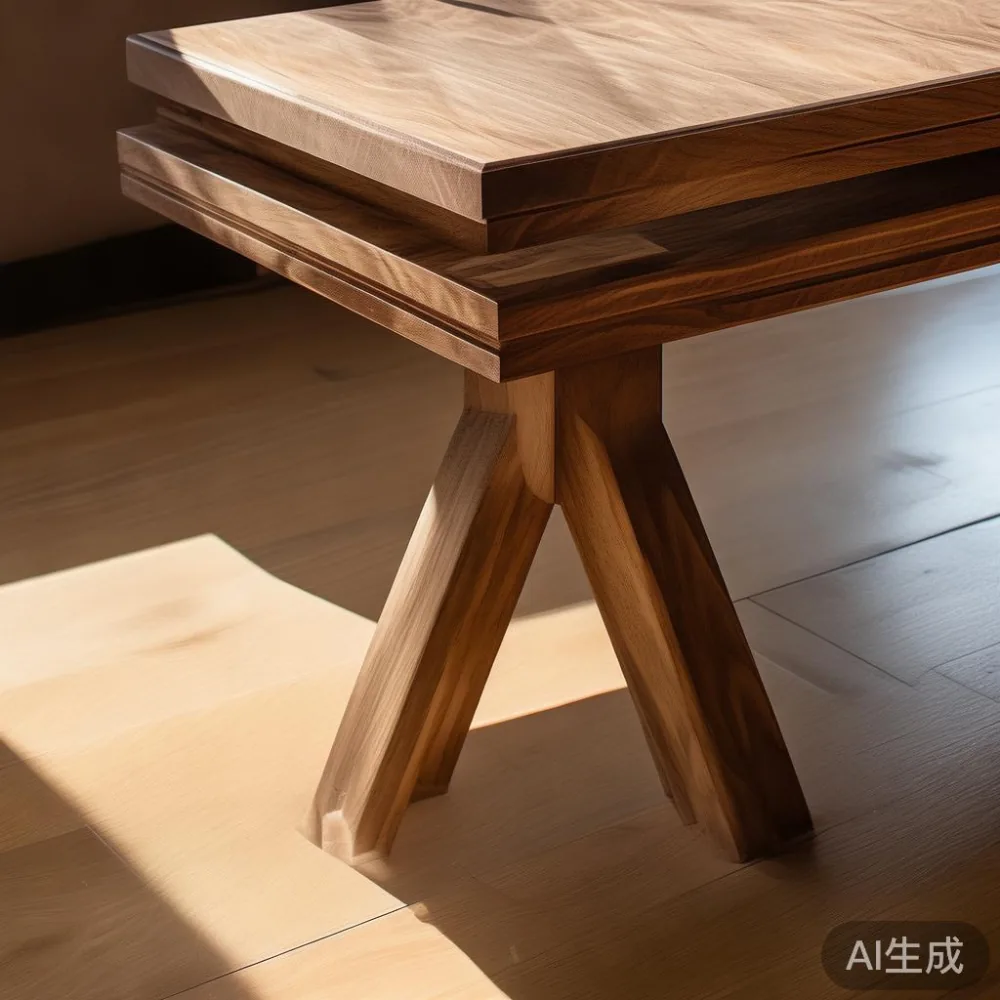
North American white oak, European ash, and black walnut each carry different densities (oak hits roughly 750 kg/m³, ash about 670 kg/m³, walnut around 660 kg/m³), which affects both how the piece feels in the hand and how much it costs to freight from port to Singapore. Lighter timbers such as ash let you reduce container weight on a 40ft HQ container, which saves roughly S$8 to S$12 per cubic metre when shipping to Tuas. Heavier species eat into that budget. A solid wood coffee table running between 18kg and 26kg is most likely oak; below 18kg, it is almost certainly rubberwood or ash. That handshake rule alone explains a S$400 to S$900 retail gap.
2. Kiln-Drying Schedule: Why 30 Days Beats 7 Days
Freshly cut timber holds water — sometimes 60% to 80% of its weight as moisture. If a workshop rushes that moisture out in seven days using a high-temperature kiln, the wood is technically dry on the outside but stressed on the inside. Over the next 12 to 18 months in a Tampines air-conditioned living room, that internal stress releases as bows, cupping, or cracking at glue lines. A workshop that dries more slowly — 25 to 35 days at lower temperatures, sometimes with a final 14-day conditioning phase — produces boards that stay flat through decades of Singapore humidity swings between 55% RH (January morning in a HDB corridor) and 85% RH (a wet August afternoon before the dryer kicks in).
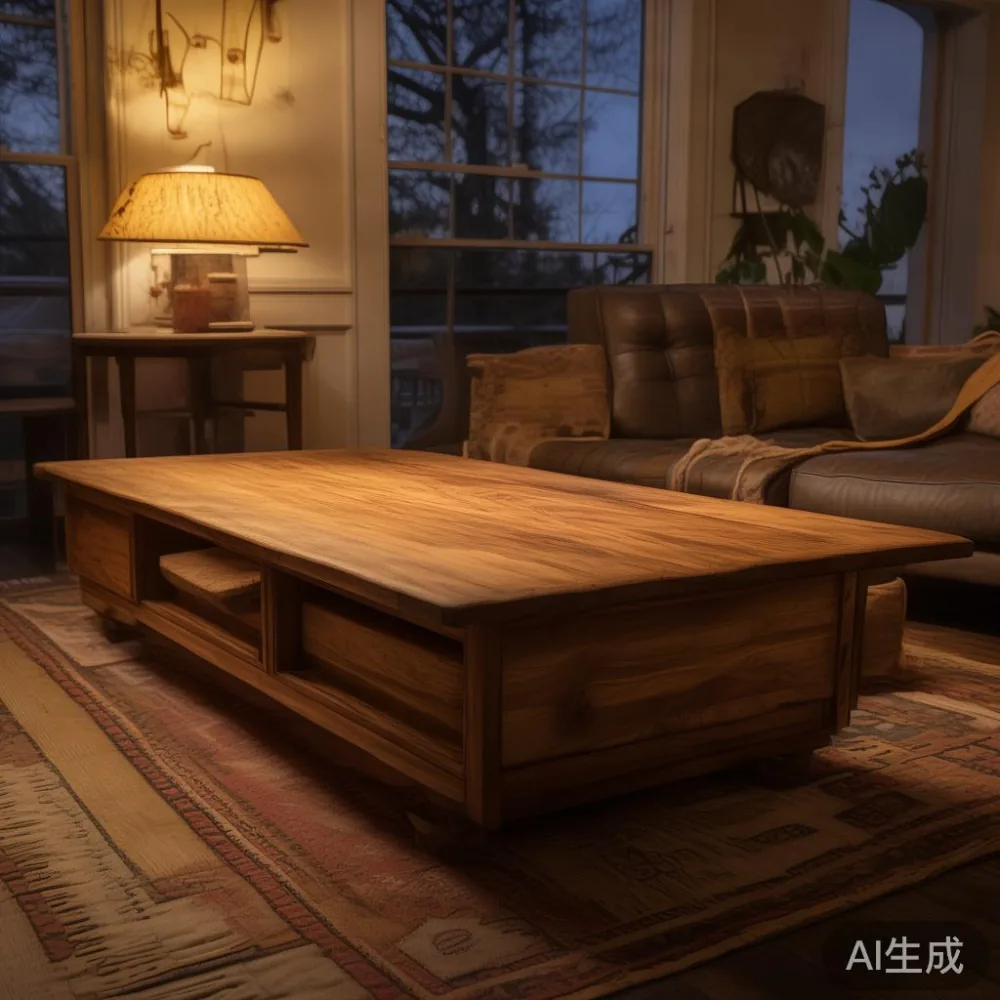
The cost of patience is real. A 35-day drying cycle ties up factory floor space and adds labour-hours per board. To put numbers on it, well-conditioned oak can add roughly S$18 to S$28 per metre of finished length compared with rushed stock. Multiply that across a four-door wardrobe or a six-seater dining table, and it is a meaningful chunk of the retail price. MIDHILL furniture lines I have seen in detail run 28 to 32 day cycles on European oak and ash. Cheap imports tend to run 7 to 10 days. If a seller cannot tell you the drying time, assume the worst.
3. Joinery And Construction: Mortise-And-Tenon Versus Dowels And Screws
A solid wood bed frame can be assembled in three ways. The cheapest uses metal corner brackets, particleboard cleats, and visible screws — it costs roughly S$95 to make a queen headboard panel and about 40 minutes of labour per frame. The mid-tier uses glue, dowels, and a few hidden screws. The honest high-tier uses mortise-and-tenon, dovetailed drawers, and floating panel construction, where the centre panel of a wardrobe door floats in grooves to allow for seasonal movement. That third method requires a joiner with eight to ten years of training, a single-drawer build can take 90 minutes of concentrated handwork versus 8 minutes on a dowel line.
Look closely at a drawer corner. If you see straight pencil lines and circular dowel holes, you are looking at a S$120 piece. If you see interlocking finger-shaped pins with thin gaps, you are looking at a S$420 piece. This is exactly why a post-modern light luxury dresser with dovetail fronts feels different on the showroom floor. The joint is not just structural; it is a tactile signal.
Is A Painted Finish Cheaper Or More Expensive Than An Oil Finish?
This is one of the questions buyers in Singapore ask me most often, especially after they see a French light luxury sideboard in a champagne tone next to a natural oak one at the same price. The answer is unintuitive: a high-quality painted finish almost always costs more than a high-quality oil finish. Here is why.
An oil finish is a wipe-on, wipe-off process. Four coats over raw oak is roughly 1.8 hours of labour per dining table top, plus drying time between coats. A painted or lacquered finish requires primer, sealer, two to three colour coats, sanding between each, and a final topcoat — easily 6 to 9 hours per piece. Spraying it cleanly in a dust-controlled booth requires the workshop to maintain a clean room, which adds utility cost across every paint job. A sideboard with the same oak substrate, oil-finished, finishes at S$1,640. The same sideboard in a hand-rubbed pale grey lacquer might be S$1,890. That S$250 difference is mostly labour and booth air filtration, not raw lacquer — most finishing chemicals are surprisingly inexpensive.
For buyers asking how to style American bed in bedroom with a painted footboard, treat the finish as a styling anchor rather than a cost-cutting shortcut. A S$280 saving on a poorly cured painted frame can mean yellowing within 14 months in a window-facing Tampines flat. A well-cured finish will look the same eight years later.
4. Hardware, Soft-Close Drawers, And Why Blum Costs More Than A Tier-2 Brand
Soft-close drawer runners sit in two camps. German-made Blum tandem runners with full extension, 30kg load capacity, and 100,000-cycle testing cost the factory S$22 to S$32 per set, retail markup to S$48 to S$62 per drawer. A Chinese-made alternative with 20kg rating and basic soft-close comes in at S$8 to S$14 per set, retail at S$22 to S$35 per drawer. Across a 6-drawer dresser that gap is S$250 to S$300 just on runners. The same logic applies to European hinges (S$2.80 to S$4.50 each for Blum versus S$0.90 to S$1.40 for unbranded).
Beyond cost there is performance: a bed frame nightstand in a young couple's Punggol flat gets opened and closed roughly 8 to 12 times a day. Blum hinges are tested to 200,000 opening cycles. Budget hinges fail at 30,000. Two years in, one drawer starts sagging. That is the price you paid to not pay.
If you are working out best Industrial bed for 2026 with a charred-ash finish and visible steel uprights, ask the seller how the steel meets the timber. AISI 304 stainless uprights that are welded then sanded cost more than black-painted mild-steel tube. They also outlast a HDB that has only ever had two coats of paint in 22 years.
5. Freight, GST, And The Singapore-Specific Shipping Stack
A 40ft HQ container holds roughly 28 to 32 cubic metres of finished furniture depending on packing density. Foshan to Singapore is a 7 to 10 day voyage via the Port of Shenzhen or Nansha, followed by 2 to 4 days of drayage to a Tuas bonded warehouse, then 1 to 2 days for final delivery to a HDB door. Total lead time door-to-door is typically 18 to 28 days for in-stock items, longer for custom orders.
On top of freight, Singapore adds GST (currently 9% on most goods) and, for LCL shipments below 15 cubic metres, a fixed handling fee at the local freight forwarder of S$280 to S$450 per consolidated shipment. That means a S$1,400 dining table becomes S$1,526 after GST and consignment fees. For a S$480 nightstand, the same fixed fees push it to S$548-ish — a heavier relative tax on lower-priced items. Free shipping thresholds (MIDHILL offers free shipping over US$350, roughly S$470) start to make a real dent at the mid-range, which is why a one-piece accent chair fee often feels high.
Lift and corridor widths are worth a sentence too: a finished queen bed frame is usually 218cm x 162cm x 110cm in packaging, and an HDB corridor is about 1.6m wide at the widest turn. A disassembled flat-pack arrives in 4 to 5 cartons around 22kg each. An assembled frame arrives in one carton around 45kg and may not clear a tight stairwell in older Bedok blocks. That is not the wood's cost, but it is your cost.
6. How Design Complexity Pushes Or Pulls The Price Down
A solid slab dining table top is the most expensive top per square metre a workshop can build — not because the wood is fancier, but because it demands a wide, clear, defect-free board. A 240cm x 100cm top needs a tree with a trunk at least 80cm in diameter. Most hardwood logs produce a usable slab of only 30% to 45% of their volume once you cut around knots, checks, and sap rings. The remainder becomes offcuts and joins. That yield ratio is why live-edge walnut tops can be triple the price of clean rectangular oak at the same dimensions.
Conversely, a tapered leg, a curved apron, or a hand-carved relief can drop yield because it uses shorter, narrower pieces. A clean-line Asian-influenced coffee table sg showroom piece you saw on the Jurong East display — tapered legs, no live edge, no carving — can hit a friendlier price because the cuts come from shorter offcuts that would otherwise be written off. This is also why retail lines such as minimalist Japanese for small living room arrangements (low-profile frames, simple stretcher rails, neutral slats) often price lower than American-looking high-back counterparts. Japanese for small living room design philosophy is honest about which cuts it uses.
7. Warranties, Returns, And The Hidden Cost Of "Lifetime" Promises
A 10-year structural warranty costs the brand real money in the form of reserve accounting and replacement logistics. A warranty that covers only manufacturing defects (joint failures, premature cracking, hardware failure) is reasonable. One that also covers "normal wear" is nearly meaningless — almost no furniture will fail outside normal wear in 10 years, so the warranty pays out only on the rarest cases. Lifetime refinishing, which MIDHILL offers, is a real service: it ties up workshop time, shipping costs back to Foshan, and refinisher hours at roughly S$180 to S$280 per chair sanded and re-oiled. Sellers that absorb those costs in the original sticker price have priced them in. Sellers that offer the policy free but quietly defer the pickup fees to the buyer have not.
A 14-day return window, where the item can be sent back in original packaging with all foam corners and shrink wrap intact, implies the brand has thought about logistics. Often the cost of those return shipments — S$90 to S$160 per piece from a Singapore warehouse back to China — is absorbed by the factory as a sales cost. Budget sellers bury a 20% restocking fee inside their returns policy to claw that back. Read the small print.
8. Mid-Century Modern Accent Chair Versus A Side Chair: Why The Geometry Matters
A Mid-century modern accent chair (tapered legs, scooped seat, moulded backrest) uses bentwood or steam-bent components that the workshop cannot pull from a straight-grain offcut bin. The bending process requires a steam chamber, a bending form, and a drying clamp that holds the shape for 24 to 48 hours. A short run of 200 chairs pays the full equipment cost over 200 seats; a longer run of 800 chairs amortises the same equipment cost across 800 seats. Production volume alone can swing a chair by S$35 to S$90 per unit.
A flexible dining chair, by contrast, uses straight-grain legs and a flat or gently curved back panel, which any carver can shape with a bandsaw. That is part of why the matching side chair to a dining table lands well below an accent chair on the price ladder. For Singapore homes, where one Japanese for small living room aesthetic at the doorway matches three styles as you walk in, the accent chair is also the most-photographed and most-discussed piece in the room, so the premium is not always unfair.
9. Real Numbers: A Side-By-Side Price Stack For Two Hypothetical Coffee Tables
Picture two solid wood coffee tables in the MIDHILL showroom. Both measure 120cm x 60cm x 42cm, both fit a 1,100 sqft BTO, both weigh roughly 22kg packed.
Table A: rubberwood substrate, oil finish, dowel construction, basic soft-close drawer, dry time 8 days, basic Blum-style hinge knock-off, 2 drawers, no dovetail. Roughly S$720 to S$860 including freight, GST, and a 2-year limited warranty.
Table B: European oak substrate, satin lacquer, dovetail drawer fronts, full mortise-and-tenon frame, Blum tandem runners, dry time 28 days, 5-year warranty, lifetime refinishing included. Roughly S$1,440 to S$1,690 on the same Singapore doorway. The 2x price gap is not brand markup. It is wood, joinery, drying, hardware, finish, and logistics — every one explained above.
If you consider the European bed vs Modern bed comparison on the same principle, the number is your proxy for which way the manufacturer leans: solid panel-and-stave oak with dovetail, or engineered slats with knock-down corner blocks. Both can be honest designs. They are simply priced for different things. Buyers asking how to style Japanese sofa in bedroom against, say, a low sling-back design can rest easier knowing exactly which features they are paying for.
10. A Practical Checklist Before You Buy A Solid Wood Piece In Singapore
Ask five questions, and you will be ahead of most shoppers. (1) What is the species and origin of the wood, and what was its kiln-drying schedule in days? (2) What joinery is used on the main stress points, and what hardware sits on the drawers and hinges? (3) How many coats of finish, and what is the booth grade? (4) What does the warranty cover, and what does it exclude? (5) What does the freight cost look like once it lands at your HDB lift on the 12th floor in a Punggol Walk block? The fifth answer alone can be worth a S$180 to S$240 difference depending on delivery method.
For buyers working out how to style American bed in bedroom in a 900 sqft condo with a tiled living-dining floor, a coffee table sg piece in solid oak at roughly 22kg with satin lacquer is a defensible choice that should hold shape for at least a decade, given a 28-day kiln cycle and proper soft-close hardware. Pick wrong on any one factor and the savings become visible in 14 to 24 months. Pick right, and the piece ages the way it was meant to — quietly, without bowing, without sticking drawers, without flaking finish. That is what you are paying for, and what the printed price tag is trying, in its blunt way, to tell you.