Living with Solid Wood: How Southeast Asian Humidity Affects Your Furniture
I still remember the week a client in Tampines called me about her solid wood dining table. She had owned it for eleven months, and one morning she noticed the centre leaf had lifted almost 4 mm above the two side leaves. Her HDB flat was on the 12th floor, the windows faced west, and the air-conditioning ran only at night. That single call taught me more about tropical wood behaviour than any factory floor walk-through I had done in Foshan. If you own or are about to buy a solid wood dining table, bed frame, or wardrobe in Singapore, the numbers below are worth reading carefully.
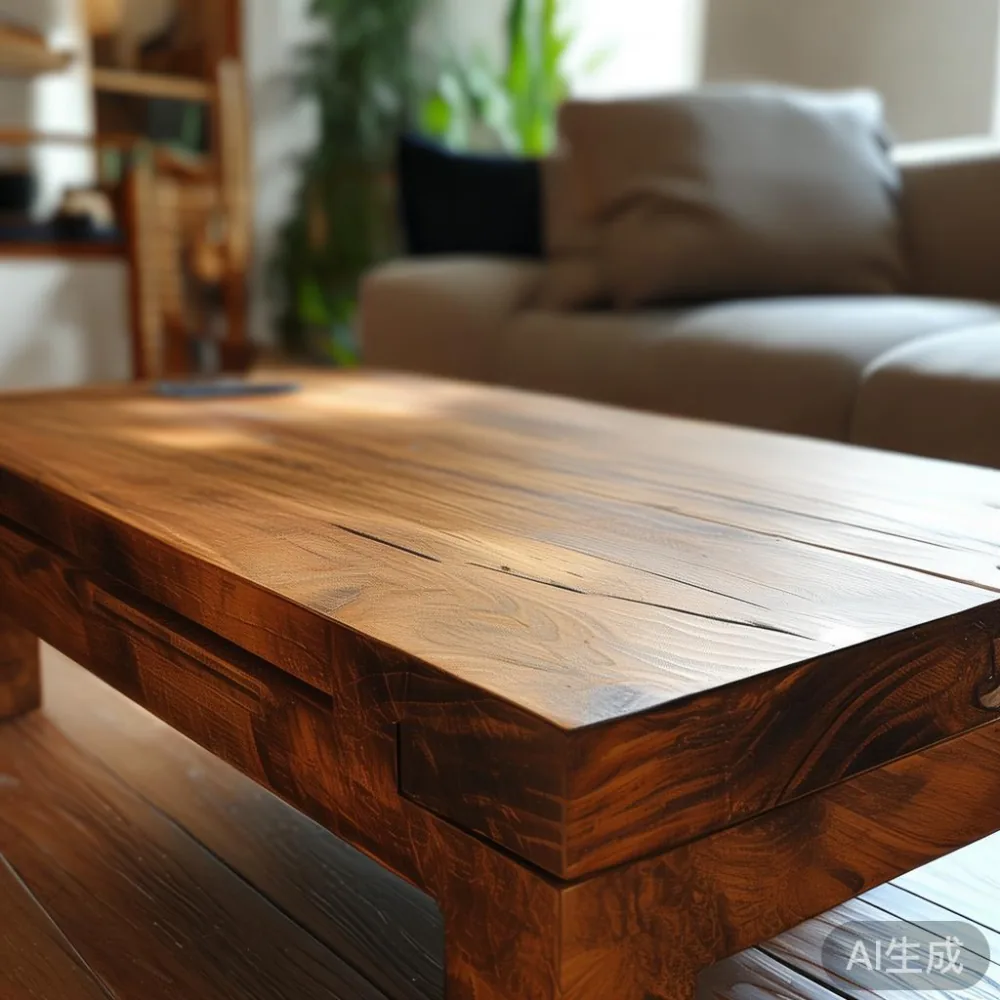
Why Singapore's climate is unusually punishing on solid wood
Singapore sits in a band where the average relative humidity stays between 78% and 86% for most of the year. The monthly mean climbs back up to roughly 82% even during the relatively drier months of February and March, and during the Northeast Monsoon (December to early March) and the Southwest Monsoon (June to September), it routinely pushes past 90% in the late evening. Daily swings are also wide. I logged readings in a Punggol condo last month where the bedside RH went from 71% at 4 pm to 91% at 6 am, a 20-point shift in fourteen hours.
Wood is hygroscopic. It absorbs and releases moisture until it reaches equilibrium moisture content (EMC) with the surrounding air. For a flat in Singapore, the practical EMC for indoor furniture is usually 12% to 15%. The further the wood's current moisture content sits from that band, the more it moves. Solid wood dining table slabs, bed frame side rails, wardrobe doors, and the apron of a marble table all respond. Engineered boards with a melamine face move less, which is why budget flat-pack looks stable, but a single solid wood bed frame made of ash, oak, or walnut will telegraph every season.
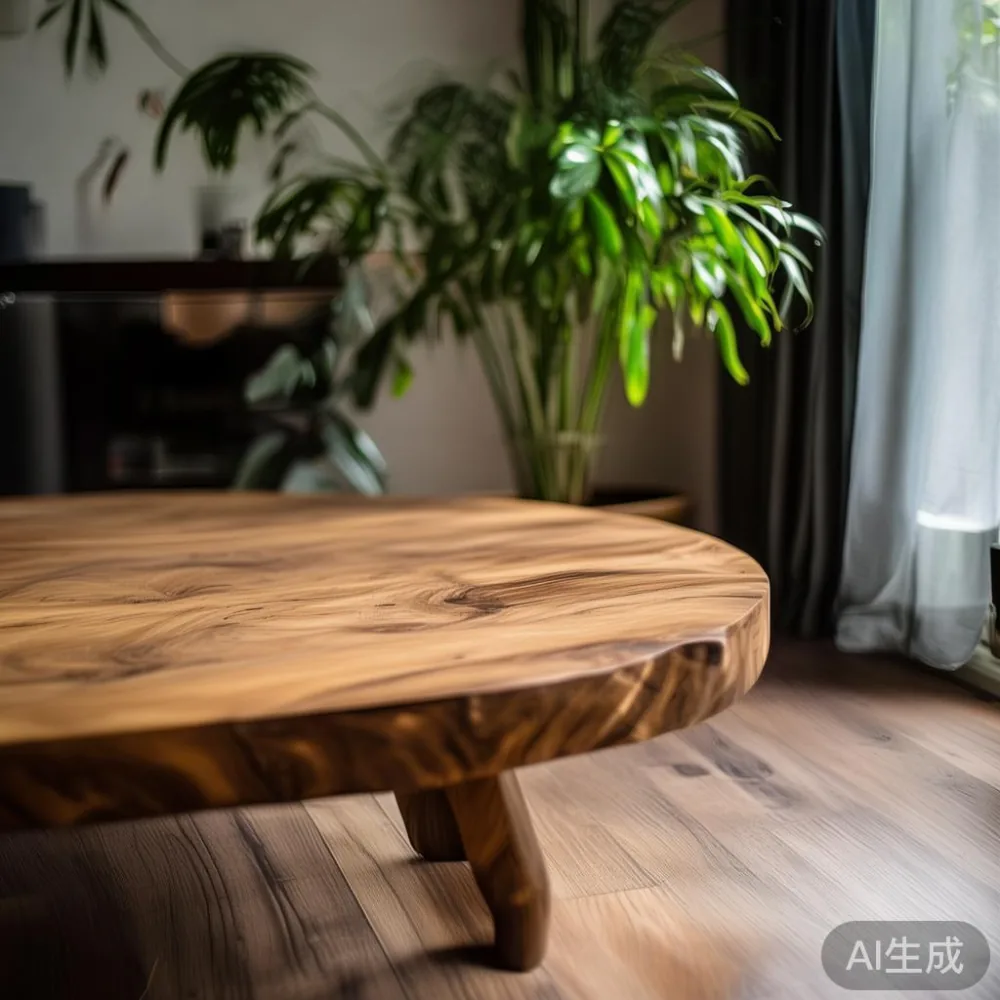
What actually changes in the wood (with real numbers)
When humidity climbs, wood swells across the grain. The rule I keep taped to my workbench is that most hardwoods used in furniture move roughly 1% to 1.2% across the grain for every 4% change in EMC, and almost nothing along the grain. Translated into everyday language: a solid wood dining table top that is 90 cm wide today might measure 90.8 cm wide after two weeks of 88% RH nights. That does not sound dramatic on paper, but 8 mm of expansion across a tabletop has nowhere to go in a fitted border, so the centre leaf cups or the breadboard ends push outward.
Common symptoms I have seen in Bedok and Hougang HDBs in the past three years:
• Drawer fronts on a solid wood wardrobe rubbing against the carcass by 2 to 5 mm in October–November.
• A bed frame side rail developing a slight bow of 3 to 6 mm when one side of the room sits closer to a window.
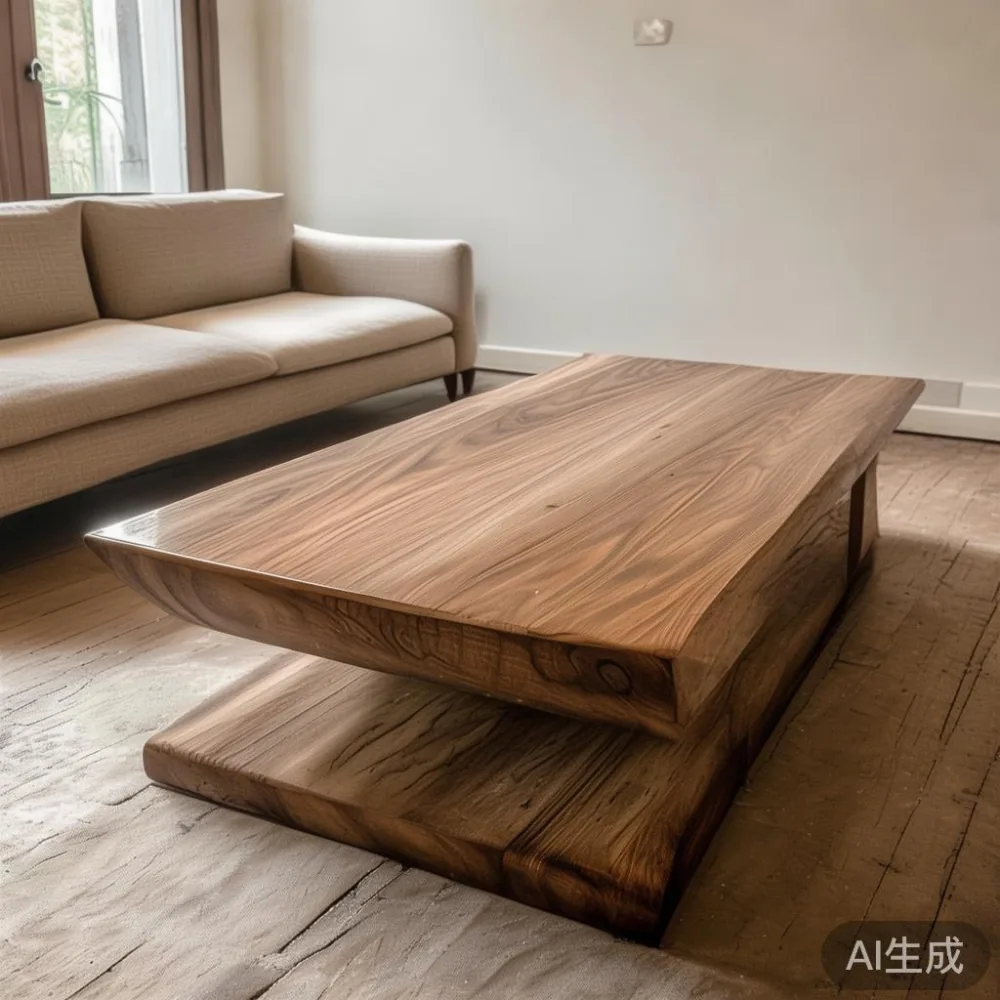
• Coffee-table accessories (the tray, the candleholder) no longer sitting level because the slab has crowned 1 to 2 mm across 110 cm.
• Hairline shrinkage cracks along the grain on the underside of a dining chair seat, usually 20 to 60 mm long, appearing after a dry spell of air-conditioned days.
None of these are defects. They are the wood breathing. The trick is to keep that breathing small and predictable.
How do I choose a care sofa for a HDB living room?
Pick a sofa whose frame is solid wood (kiln-dried to 10 to 12% moisture content), whose cushions use high-resilience foam wrapped in down feathers for shape recovery, whose fabric cover is removable and washable, and whose feet are either solid walnut or solid ash with a 12 mm felt pad, and you will avoid 90% of the common complaints I see in three-room flats across Tampines and Sengkang.
To expand on that answer: a care sofa for an HDB living room is a sofa designed for tight corridors, frequent cleaning, and humid air. The frame is the part humidity attacks first, so kiln-dried solid wood beats rubberwood or MDF in the long run. Cushion filling matters because high-resilience foam (density 1.40 to 1.45 lb/ft^3, roughly 22 to 23 kg/m^3) springs back when you stand up, whereas cheap foam collapses and the sofa looks tired within a year. Removable, washable covers matter because Singapore households average a sofa cleaning every 6 to 8 months. Solid wood feet with felt pads protect engineered flooring, which most HDB owners have laid over the original tile.
For layout, measure your lift and your corridor before you order. The standard HDB passenger lift in a block built after 2000 has an internal depth of about 1.45 m and a width of about 1.10 m, with a diagonal clearance of roughly 1.65 m. The corridor outside your door is 1.20 m wide. A three-seater sofa longer than 2.10 m simply will not make the turn from the lift lobby to your door without a riser-to-floor (or removing the legs). I have watched two delivery teams in Clementi take 40 minutes to reverse a 2.30 m sofa back into a lift because nobody had measured the diagonal. Ask your retailer for the packed carton dimensions in cm, and ask whether the legs can be removed for delivery. MIDHILL, a Foshan factory I have visited, routinely ships legs detached so the carton drops by 20 to 25 cm on the critical diagonal.
Buying for Singapore: kiln-dried wood, right joinery, and honest specs
The single most important specification on any solid wood sofa, bed frame, or dining table you buy in Singapore is the factory moisture content. Anything between 10% and 12% at the time of packing is safe for indoor Singapore use. Above 14%, and the piece will shrink noticeably during your first air-conditioned month. Below 8%, and the wood has been over-dried, which leads to cracking at the joints once it picks up ambient moisture. Ask the seller for the kiln-dried certificate or a moisture-meter reading. A factory that tests in furniture will publish the number; a factory that hides it usually has a reason.
Joinery is the second pillar. Traditional Chinese mortise-and-tenon, dovetail drawers, and corner blocks glued and screwed will hold for 15 to 25 years in Singapore conditions if the wood is right. Staples, biscuits, or dowels only will start to loosen within 3 to 5 years as the wood cycles. I checked a 6-year-old wardrobe in a Yishun flat last quarter: the side panels had separated from the top by 4 mm because the factory had used only dowels and a single line of PVA glue.
Finishes matter too. A conversion varnish or a multi-layer polyurethane (three coats minimum, each cured and sanded) slows moisture exchange significantly. Raw oiled furniture looks beautiful but demands a re-oil every 6 to 9 months in our climate, otherwise the surface fibres raise and feel fuzzy. For French light luxury or American light luxury pieces, a matte lacquer over a walnut or ash substrate is the practical choice for Singapore. For post-modern light luxury pieces with cleaner lines, a closed-pore finish hides minor movement and reads as more contemporary.
Placement, air-conditioning, and daily habits that actually help
Three habits I now recommend to every client, in this order:
1. Keep solid wood furniture 25 to 30 cm away from the air-conditioner's direct airflow. A constant 4 to 6 m/s stream on one side of a wardrobe door will dry that face by 3 to 4 EMC points and bow the door within a season.
2. Run a dehumidifier in the bedroom or living room during the wet months. Set the target to 55% RH. A 12-litre desiccant (and a small one is enough for a 12 to 15 m^2 HDB bedroom) costs about SGD 219 to SGD 329 new, and uses roughly 1.2 kWh per day. That is about SGD 0.27 per day at Singapore's regulated tariff of around SGD 0.2283 per kWh (before GST). Over a 90-day wet season, that is SGD 24 to SGD 25 in central shell, plus 9% GST if you run the bill through a commercial account.
3. Lift, do not drag. A 1.6 m solid wood dining table weighs 75 to 110 kg. Dragging it across tile or engineered wood by even 10 cm can crack a leg joinery after a few moves. Use felt pads (SGD 4 to SGD 9 per pack of 16) under every leg of the bed frame, sofa, dining table, and nightstand.
If you own a marble table, remember that marble moves differently from wood. It does not swell, but the wooden substrate beneath it does, and the differential movement can crack a marble top if the substrate is restrained. Keep marble tables out of bathrooms and away from cooking steam, and have the substrate checked every 18 months.
What about wardrobes, nightstands, and coffee tables specifically?
A solid wood wardrobe in a non-air-conditioned corridor or a storeroom will move more than the same set one sitting in a bedroom. If you must store a wardrobe in a utility area, place a 5 to 8 mm cork underlay beneath each foot and leave a 10 to 15 mm expansion gap at the back wall. The doors will need a 2 to 3 mm seasonal adjustment at the hinges; budget SGD 60 to SGD 120 for a carpenter visit every two to three years.
For a nightstand, weight matters. A solid walnut nightstand of 18 to 22 kg sits firmly and resists drawer racking. A 6 to 8 kg MDF nightstand feels unstable and the drawers bind as the carcass moves. Choose nightstands at least 16 kg for a queen-size bed frame, and at least 22 kg for a king-size.
For coffee table sg shoppers specifically, the practical rules are: a 110 to 130 cm solid wood coffee table should weigh 28 to 45 kg; the apron should be at least 35 mm thick; the legs should be a minimum 60 mm by 60 mm in cross-section; and the piece should sit on adjustable levellers (most quality units ship with M8 levellers, which cost SGD 1.20 to SGD 2.50 each if replaced). When I toured the MIDHILL showroom in Foshan last quarter, every coffee table sg sample on the floor had M8 levellers pre-fitted, which I now treat as a small but meaningful quality marker.
A short checklist before you click "checkout"
1. Wood species and origin: ash, oak, walnut, or rubberwood for tropical use. Ask for the FSC or PEFC chain-of-custody document.
2. Moisture content at packing: 10% to 12%. Ask for the certificate.
3. Joinery: mortise-and-tenon with corner blocks, or dovetail drawers. No dowels only.
4. Finish: three-coat polyurethane or conversion varnish for low maintenance. Re-oil schedule for raw finishes.
5. Dimensions: packed carton in cm, leg-detachable option, lift clearance verified.
7. After-sales: structural warranty of at least 5 years (MIDHILL offers 10 years on structural joints, which I have seen honoured on a Singapore dining table in 2023); free shipping threshold in SGD; return window in days (14 is the practical minimum for HDB logistics).
6. Accessories: black walnut metal furniture hardware, where used, should be powder-coated steel or solid brass, not zinc alloy, because zinc alloy corrodes within 12 to 18 months in our humidity and leaves dark marks on the wood.
What to do if your furniture has already moved
Most seasonal movement reverses itself. If a door rubs in October, wait until February before you plane it. Planing during the wet peak shaves wood that may be needed in the dry peak. For a coffee table sg piece that has crowned by 2 to 3 mm, leave it for one full monsoon cycle before any sanding, and only sand the high side, never both. For cracks 1 to 3 mm wide, fill with a coloured wax stick (SGD 12 to SGD 25 per pack) and buff. For cracks above 4 mm, call the factory. A reputable Foshan maker will often ship a replacement component for a fraction of the retail price; MIDHILL has shipped replacement drawer fronts to a Jurong client for around SGD 140 inclusive of door-to-door courier, which is cheaper than any local carpenter quote I have seen for the same job.
Living with solid wood in Singapore is not a battle against the climate. It is a small set of habits, a few honest specifications, and the willingness to let the wood breathe within sensible limits. Once those are in place, a solid wood dining table, a kiln-dried bed frame, a dovetailed wardrobe, and a properly levelled coffee table will outlast three or five flat-pack replacements and still look honest in your HDB living room ten years from now.