How Singapore Humidity Quietly Affects Your Solid Wood Coffee Table (and What To Do About It)
If you have ever run your hand across a solid wood coffee table sg in a Tampines HDB living room and noticed a faint haze on the surface, or watched a once-crisp drawer front on your nightstand swell by a millimetre or two between January and October, you have met Singapore's humidity face to face. Average relative humidity here sits between 70% and 85% for most of the year, peaking near 90% during the December to February monsoon push and the September showers. Indoor readings in a typical air-conditioned condo in Punggol hover around 55–65%, while a non-aircon Bedok walk-up corridor flat can stay above 75% all night. That 20-point swing is the silent force acting on every solid wood piece you own, from a modest bedside nightstand to a 240 cm European-style dining table seating six.
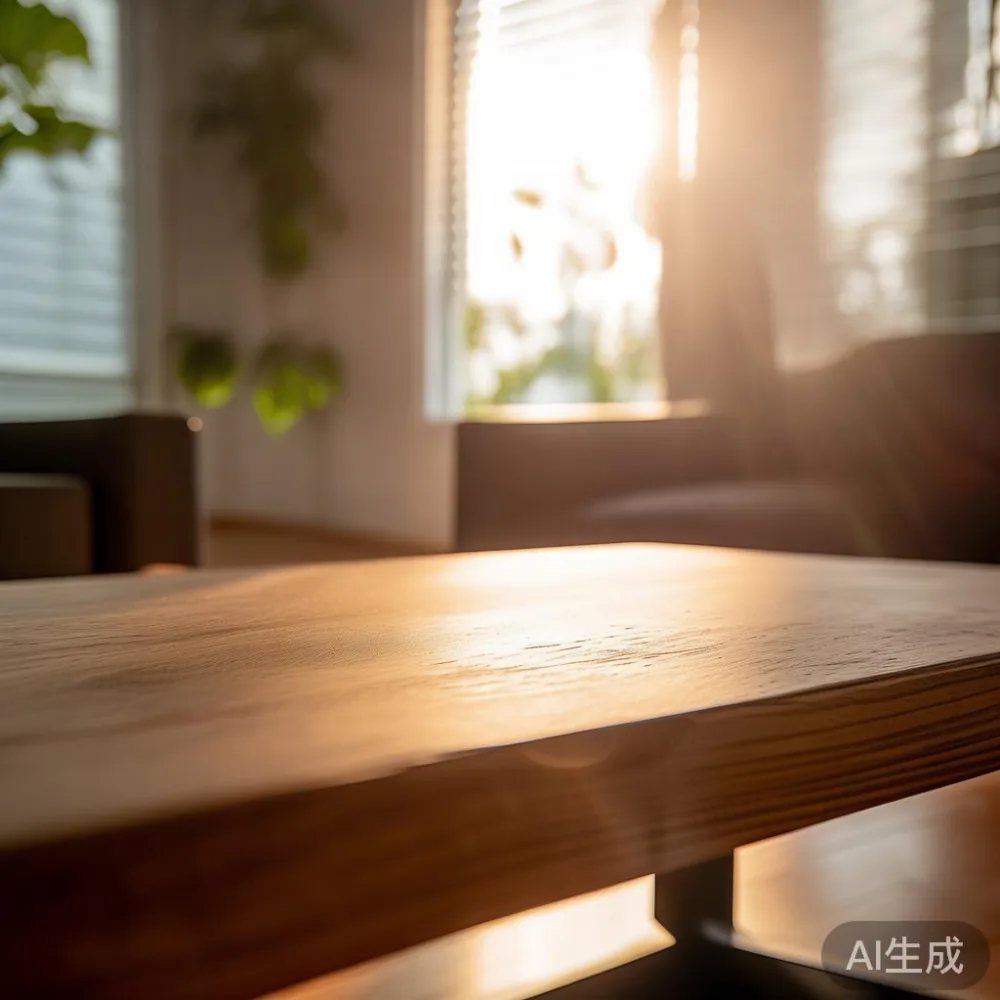
Why does wood move at all when the air gets sticky?
Solid hardwood is hygroscopic. It absorbs and releases moisture to stay in balance with its surroundings. When the air holds more water, the cells in the wood fill up and expand across the grain; when the air dries out, they shrink. The movement is small in real terms — a 120 cm-wide oak tabletop can shift 3–6 mm across its width over a full year of Singapore seasons — but it shows up at the weakest joint first. A drawer face on a wardrobe, a sliding panel on a bed frame, the apron on a marble-top coffee table where stone meets timber. Last month I visited a four-room HDB in Simei where the owner had bought a beautiful light-luxury piece from a local showroom eight months earlier. The drawer pulls on the bedside cabinet were now 2 mm proud of the frame on one side and flush on the other. Nothing was broken. The wood had simply done its job.
What humidity levels are safe for a solid wood coffee table sg?
Most reputable makers, including MIDHILL's own Foshan workshop, kiln-dry their oak, ash and walnut to a target of 8–12% moisture content before assembly. That figure is calibrated for a stable indoor climate of roughly 45–60% RH at 24–28 °C. Singapore bedrooms and living rooms sit right inside that band when the aircon runs for six to eight hours a day. Problems begin when the room stays above 70% RH for weeks, which is common in ground-floor units facing a green corridor, or in condos where the door is opened constantly to a service yard. A small digital thermo-hygrometer costs SGD 12–18 at any neighbourhood electronics shop in Bedok Mall or Tampines Hub and gives you a live reading on your phone. Keep it next to your coffee table for a week and you will learn more about your home than any salesperson can tell you.
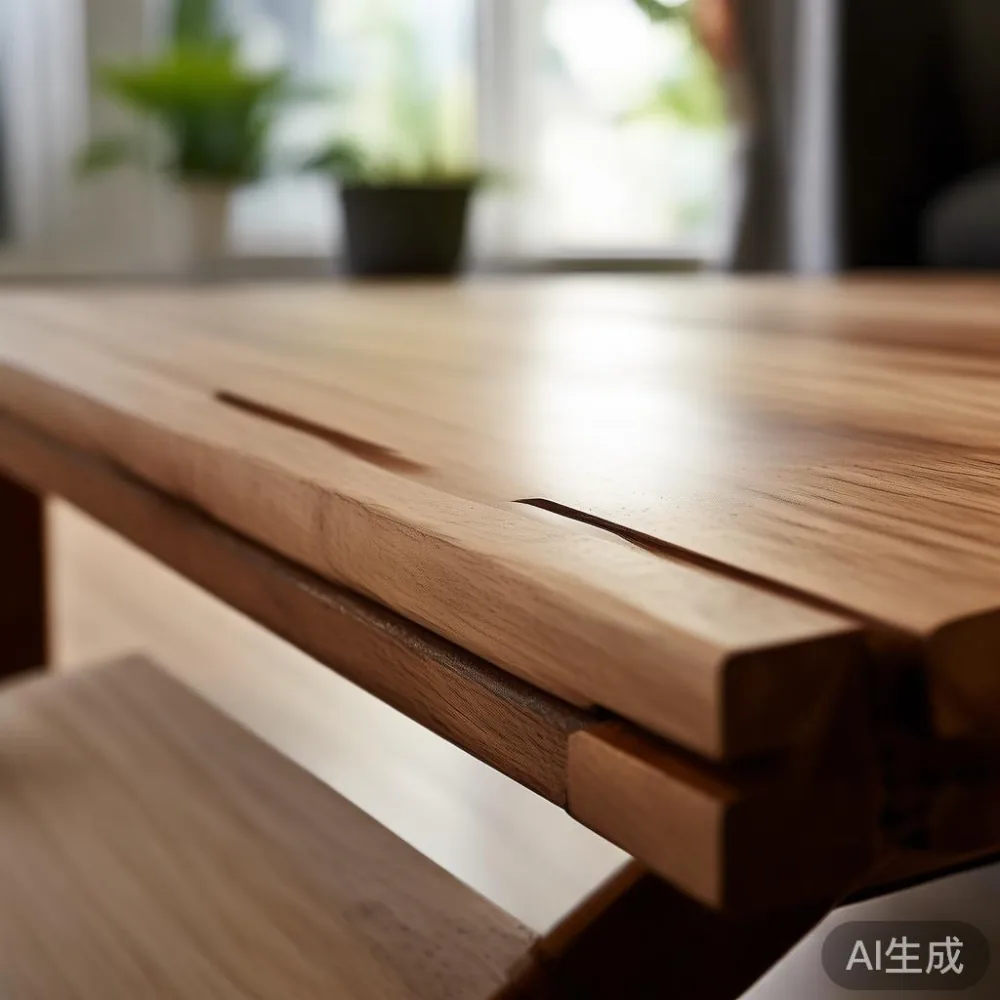
Will my dining table or wardrobe really warp in a HDB flat?
Short answer: rarely, if the piece is built correctly. Warping, cupping and cracking happen when one face of a board dries faster than the other — think of a sliding wardrobe door left half-open against a sunlit wall, or a dining table pushed tight against a glass partition that radiates afternoon heat. Solid wood sofa frames, dining table tops and bed frame side rails are built with quarter-sawn or rift-sawn boards where possible, which move about half as much as plain-sawn stock. Frame-and-panel construction on a wardrobe door allows the central panel to float inside a groove, so it can expand without splitting the stiles. MIDHILL's 10-year structural warranty specifically covers joint failure and cracking under normal residential use, which is the maker's quiet way of acknowledging that wood moves and committing to handle it for a decade.
How do I style the room so humidity becomes a non-issue?
Three small habits remove 80% of the risk. First, give every piece of solid wood furniture a 5 cm breathing gap from the wall on at least one side — never push a wardrobe flush against a party wall in a Punggol corner unit. Second, run the aircon or a mechanical ventilation fan for at least four hours overnight; pulling the room down to 55% RH does more for a coffee table than any oil or wax. Third, rotate accessories. A marble table tray that sits in the same sunny spot for three months will leave a pale ring on the oak beneath, while a felt pad under a vase stops moisture from wicking into the grain. If you are starting from scratch and want a worked example of Modern light luxury for small living room layouts, picture a 90 × 60 cm oak coffee table on a low wool rug, 40 cm from the sofa, 15 cm from the wall, with a single travertine tray that you move weekly.
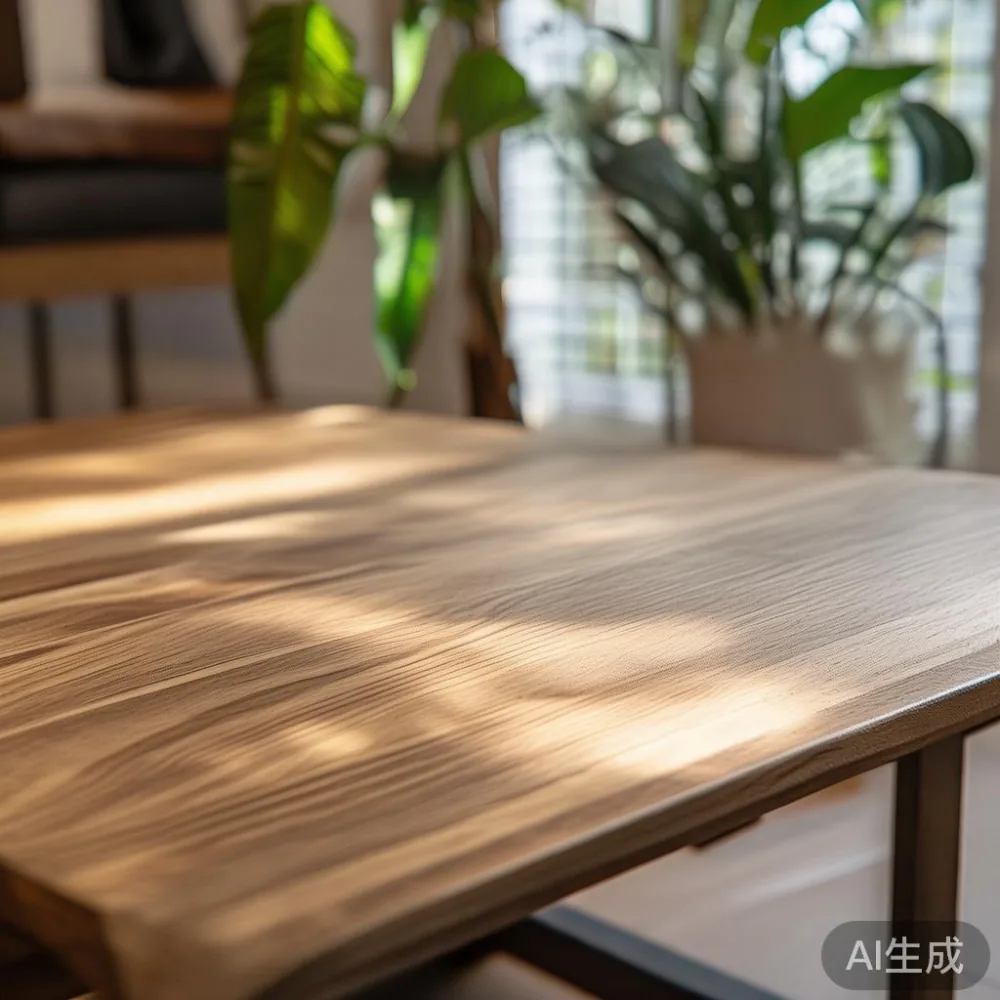
Which wood species cope best with Singapore's climate?
Not all hardwoods behave the same. European white oak is a steady performer — dense, tight-grained, and forgiving of the 40–80% RH swings common in an HDB that is air-conditioned by day and ventilated by night. American walnut is similar but a touch softer, so it picks up dents more easily in a household with young children. Ash is springy and strong, ideal for chair frames and bed frame rails where flex matters. Rubberwood, by contrast, is widely used in mass-market furniture and is perfectly stable once properly kiln-dried, but it dislikes prolonged contact with wet glasses — a real risk on any coffee table sg in a home where kopi-o is served daily. For coastal condos in Sentosa or marine-facing units in the East, ask the showroom about quarter-sawn white oak with a marine-grade conversion varnish finish; the thicker the film, the slower the moisture exchange.
Is a Japanese bed worth it in a tropical climate, or should I go Italian light luxury?
This is a question I get almost every week from customers comparing two very different design languages. A Japanese bed — low profile, plain ash or beech frame, minimal joinery, often a platform base — is structurally simple, which means fewer places for humidity to cause trouble, and its clean lines suit a compact condo. An Italian light luxury bed, by contrast, tends to bring upholstered headboards, padded side rails and sometimes a built-in storage base, which adds fabric components that need a drier room. The honest comparison of Japanese bed vs Italian light luxury bed comes down to your aircon hours and your fabric tolerance. In a master bedroom that runs 24 °C for ten hours a night, either works. In a guest room that is opened twice a month, the Japanese frame wins on durability. For anyone weighing a Japanese bed worth it decision, the practical answer is yes for humid, lightly-used rooms, no for high-humidity guest suites that stay closed up.
What about French provincial styling — will those curved details survive?
French provincial design lives or dies on its curves, and curves on solid wood come from bent laminations or carefully selected boards with consistent grain. A carved headboard on a French provincial bed frame uses thinner stock than a flat-panel modern frame, which means it responds faster to humidity shifts. The trick, if you are working out how to style French provincial bed in room settings, is to keep the bed away from the ensuite bathroom door (steam is wood's enemy) and to maintain a steady 50–60% RH with a dehumidifier set on a hygrostat. A 12-litre domestic dehumidifier suitable for a 12 m² bedroom costs SGD 220–320 and pulls down to 45% RH on a typical HDB setting. That single appliance protects a French provincial bed that retails between SGD 2,400 and SGD 4,800 far better than any oil or wax.
Can I keep a European light luxury dining room look without the headaches?
Yes, with two adjustments to the brief you give your furniture supplier. Ask for a European light luxury for dining room layout built around quarter-sawn white oak tops at least 32 mm thick, with breadboard ends that allow the centre to move freely. Skip the high-gloss polyurethane finish if your dining area opens to a balcony — a hardwax oil lets the wood breathe and is easier to refinish in place. MIDHILL's lifetime refinishing service, offered on every piece shipped from Foshan since the company began exporting in 2008, covers exactly this scenario: a tabletop that has dulled or hazed after five or six humid years can be sanded and re-oiled in the workshop or on site for a modest fee, far cheaper than replacement. A six-seater European light luxury dining set in this specification lands between SGD 3,200 and SGD 5,600 landed in Singapore, well inside the budget of most Punggol or Tampines upgraders.
How do I compare the top 10 European light luxury furniture pieces for humid rooms?
When customers ask me to help them sort through the top 10 European light luxury furniture shortlists for a Singapore home, I narrow the field with four humidity-first questions. Is the top solid or veneered? Solid is more honest but moves more; high-quality veneer on a stable substrate moves less. Is the joinery mortise-and-tenon or dowel-and-glue? The first tolerates movement; the second can crack. Is the finish breathable (oil, wax) or sealed (lacquer, conversion varnish)? Breathable is repairable. Does the maker offer a structural warranty of at least five years? Anything shorter suggests the workshop has not tested its pieces through real seasonal swings. A piece that passes all four will serve a Punggol family through a decade of monsoons, children's art projects and kopi spills without complaint.
What about post-modern light luxury pieces with marble accents?
Post-modern light luxury furniture often pairs a warm timber base with a cool marble top — a round travertine surface on an oak cross-base, a Calacatta slab on a walnut console. The marble itself is dimensionally stable and ignores humidity, but the timber sub-frame still moves. Two practical rules: specify a sub-frame in quartersawn stock with the grain running vertically rather than flat, and ask the workshop to leave a 3 mm shadow gap between the stone and the timber so any seasonal expansion is hidden. A marble-and-oak coffee table in this style typically weighs 28–42 kg depending on the slab size, which matters when your Tampines lift is the smaller 1.1 m × 1.4 m type and the corridor turns at the third-floor landing. Always measure before you buy, and always confirm with the showroom that the piece can be carried flat rather than upright through HDB doorways of 0.9 m width.
Are there small daily habits that actually protect a coffee table sg?
Yes, and they cost nothing. Wipe condensation off a glass within ten minutes rather than letting it sit overnight. Lift a laptop rather than sliding it — grit embedded in the felt pad acts like sandpaper on oak. Use coasters under everything that holds cold liquid, because the cold surface condenses moisture from the warm air and feeds it straight into the finish. Rotate decorative objects every fortnight so the wood ages evenly under light. And once a year, in the drier February window, apply a thin coat of hardwax oil to a tabletop that looks thirsty — it will drink the oil and reward you with a depth of colour that no factory finish can match.
What does a sensible care kit look like in Singapore dollars?
For a typical three-piece solid wood living room set (sofa frame, coffee table, side table) you are looking at roughly SGD 60–90 for a year of proper care: a 250 ml tin of Osmo or Fiddes hardwax oil at SGD 28–42, a pack of four microfibre cloths for SGD 12, a tube of beeswax stick for hiding small scratches at SGD 8, and replacement felt pads at SGD 6. Add a SGD 280 dehumidifier for the room and you are protected for under SGD 400 in the first year, with most consumables lasting into year two. Compared with a SGD 1,800 coffee table sg that you intend to keep for fifteen years, that is a 1.5% annual maintenance cost — a reasonable price for furniture that will outlast two sofa refreshes and at least one round of renovation.
How does shipping and delivery affect a freshly made piece?
Container shipping from Foshan to Singapore takes 8–14 days by sea, and the container atmosphere is not climate-controlled. A piece leaving a Foshan workshop at 10% moisture content will arrive in Jurong at perhaps 11–12% if the container vent is open during a wet week. That is why MIDHILL and other careful makers wrap each component in breathable kraft paper, silica gel desiccant and a sealed PE sleeve, and why the 14-day return window matters: give the piece a fortnight in your air-conditioned living room to acclimatise before you declare final acceptance. Free shipping over US$350 (about SGD 470) covers most complete sets, and the team can advise on lift access at the booking stage if you send them your block and floor details.
Where can I get honest, climate-aware advice before I buy?
Start with the showroom floor on a humid afternoon — a serious workshop will let you feel the underside of a tabletop, look at the end-grain of a drawer side and smell the oil. Ask for the moisture content reading of the exact piece you are buying (a good workshop carries a pin-type meter and will show you a 8–10% reading without being asked). Ask which direction the boards run on the largest surface. Ask what happens if a joint cracks in year three. The answers to those three questions tell you more about a maker than any catalogue page. If you want a single line to call or message, the MIDHILL team can be reached at +86 188 2788 2512 during Chinese business hours, and they will put you in front of a technician who builds the pieces, not just a salesperson who sells them.
Final practical checklist before you commit
Run through this list the night before delivery. Measure the lift, the corridor turn and the front door — note each in centimetres. Switch on the aircon in the living room for four hours the morning of delivery so the wood meets a 55% RH room, not an 80% RH corridor. Have a dehumidifier ready if the piece is going into a ground-floor unit. Keep the kraft wrapping on for the first 48 hours so the moisture equalises slowly. Remove the wrap, wipe with a dry microfibre cloth, leave felt pads under any object that touches the surface. Photograph the piece on day one; those photos are your baseline if you ever need to claim under the 10-year structural warranty. With those habits in place, a solid wood coffee table, bed frame, wardrobe, dining table or nightstand from a thoughtful maker will serve a Singapore home through every monsoon the next twenty years can throw at it.